



Why the Practice of Philosophy Is So Appealing
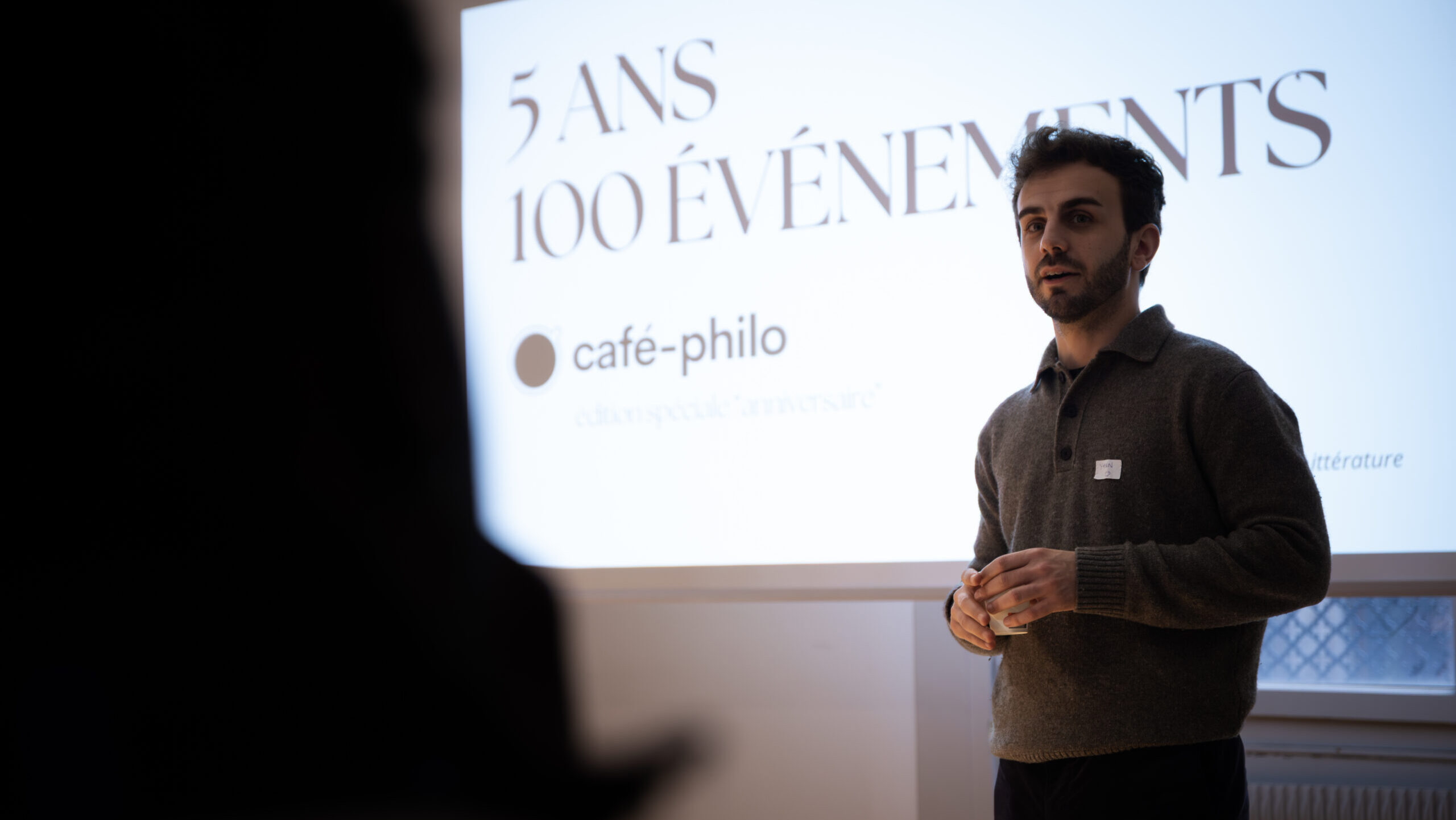
«100th Café-philo» on March 15 at the Maison Rousseau et Littérature in Geneva. Photo: Raphaël Kadishi for the Café-philo Association
At a time of polarized debates on social media, philosophy cafés are attracting a growing audience in French-speaking Switzerland. What does this trend say about our times? As president of the Café-philo Association, I’ve drawn three conclusions from my experience.
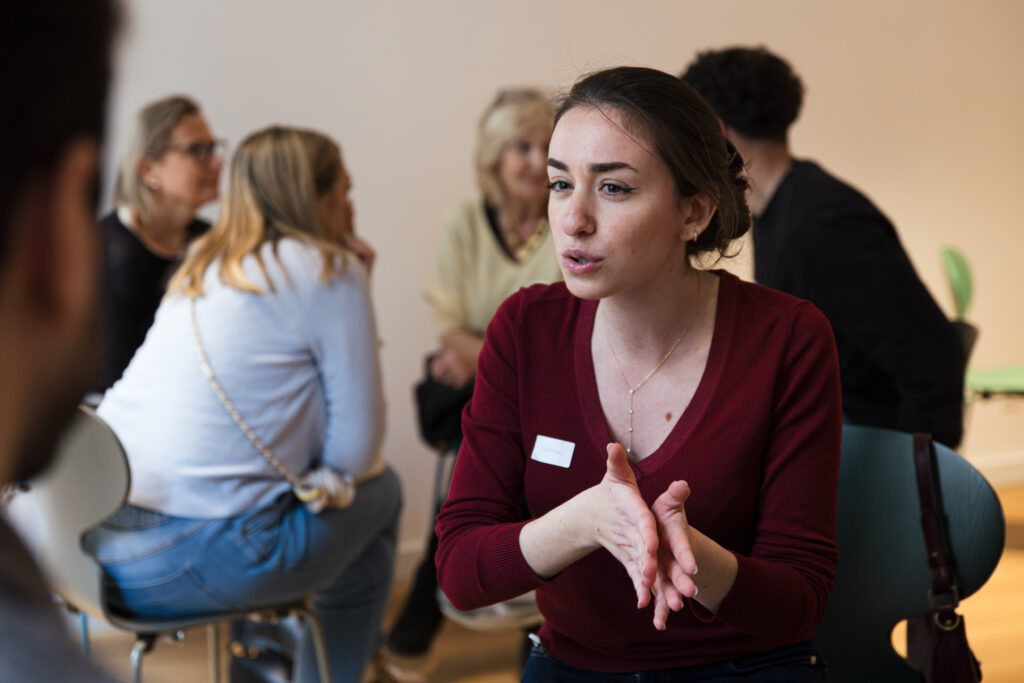
The Café-philo Association offers forums for philosophical discussion in five cities in French-speaking Switzerland. Open to everyone, these meetings are inspired by the first concept of its kind, which originated in Paris in the 1990s. The concept is simple: about twenty participants, a moderator, a question chosen collectively at the start of the session, and about an hour and a half of discussion.
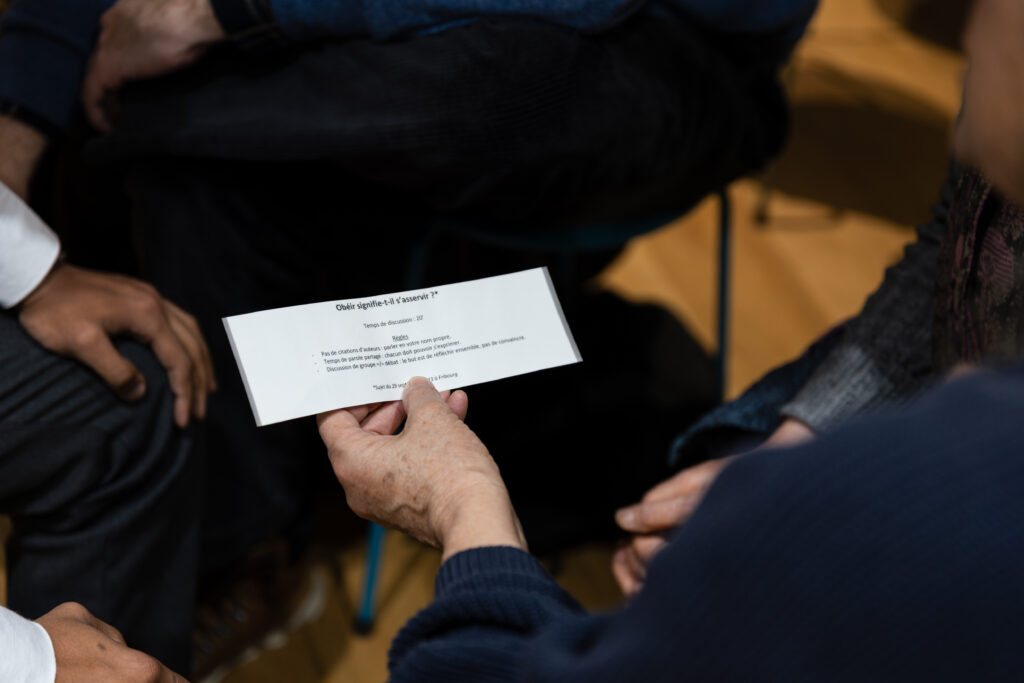
A few rules help structure the discussions. First, participants speak only when the moderator gives them the floor, even if they are addressed directly. The goal is not to engage in a one-on-one debate or to react impulsively, but to develop a collective line of reasoning. Attentive listening and a certain degree of discipline are therefore essential. Next, speaking time is allocated in the order requests are made, while ensuring a balance among participants, although there is no obligation to speak. Finally—and this is certainly the most unusual rule—it is forbidden to quote authors.
Over the past five years, these events have brought together more than 2,000 people of all ages and backgrounds and are often sold out. Furthermore, organizations as diverse as banks, festivals, and prisons now turn to us for our services. While this enthusiasm may come as a surprise in an era when philosophy seemed confined to university classrooms, I believe it actually addresses very current needs. After hundreds of hours of moderating discussions, I can identify at least three of them.
Arguments, nothing but arguments
The rule against citing authors—a cornerstone of our approach—means that every contribution focuses exclusively on the quality of the arguments. This goes hand in hand with the fact that participants generally do not know one another and do not introduce themselves at the beginning of the session. In other words, what matters is only what is said, not who says it. This results in a demand for clarity: since it is not possible to hide behind an authority figure or jargon, participants have no choice but to express their ideas in accessible language.
The absence of references does not, however, preclude rigor. On the contrary, although inspired by the French tradition, the spirit of thein French-speaking Switzerland resonates more with analytic philosophy—which emphasizes logic and the coherence of reasoning—than with the continental tradition—which relies more heavily on history and the interpretation of texts, making it often more obscure and intimidating. This distinctive feature of the philosophy café, seemingly trivial, actually defines the resolutely democratic nature of our approach.
Debate Without Arguments
The primacy of arguments, combined with a deliberately abstract and universal framing of issues, also helps prevent a scourge that plagues the public sphere: the degeneration of intellectual disagreements into personal attacks. Indeed, it has become commonplace for a debate to shift away from ideas and drift toward the supposed intentions, political affiliations, or moral failings of those who defend them—even when the philosophers in question have long since passed away. Thus, «Sartre was a pedophile,» «Rousseau abandoned his own children,» and «the Nazis read Nietzsche.» As if discrediting a person were enough to invalidate their arguments, even though the substance of those arguments may be true, regardless of who advocates them.
By placing the search for truth at the center, philosophy cafés nip the temptation to make personal accusations in the bud. This makes it easier to discuss sensitive topics without the discussions turning into conflicts. This is particularly beneficial when addressing political issues. In Lausanne, for example, the question «Can a nation exist without authority?» was addressed immediately after the riots that followed the death of a teenager during a police chase in the capital of the canton of Vaud. However, although an implicit connection to current events is often apparent, the philosophical approach quickly leads to the heart of the matter and away from personal attacks. The proof is that discussions are always peaceful and respectful, even when addressing topics considered highly contentious.
The need to meet in person
The courtesy that prevails can no doubt also be attributed to the fact that people talk to each other face-to-face. At a time when an increasing proportion of social interactions takes place through screens, philosophy cafés offer a setting where people take the time to go beyond mere small talk and the practical concerns of daily life, in order to discover meaning together.
Although this was not their original goal, these gatherings fulfill a need for deeper connection with others and thus combat another ailment of our time: loneliness. By taking a step back from their experiences and comparing perspectives, everyone can step out of the role of spectator—so characteristic of social media—for a moment and become an active participant once again.
Ultimately, the success of philosophy cafés may say something reassuring about our times: despite polarization, screens, and the fast pace of daily life, the desire to think together has not disappeared. It is simply waiting for us to recreate the spaces where it can flourish.
Economics graduate and president of the Association Café-philo, Yann Costa is an editor at Regard Libre.
You have just read an excerpt from our feature «The Role of Thought Today,» published in our print edition (Le Regard Libre No. 128).
The Origins of the Project
No sooner had I earned my high school diploma at Collège Saint-Michel, in my hometown of Fribourg, than I already missed philosophy. After years of pondering questions about freedom, justice, and happiness, I was about to begin my university studies in economics, with little chance of encountering that discipline again anytime soon.
To stay connected to philosophy, I started attending the “café-philo,” an event organized one Sunday a month at the legendary Café du Gothard by my former professor, Jean-Paul Fragnière. Captivated by that first experience, I quickly became a regular at these gatherings in Fribourg. Shy at first (I still remember trembling and stammering during my first contribution), I gradually gained confidence in my ideas as well as in my ability to express them. Until the day the moderator asked me to fill in for him when he had to be absent.
When «Mr. Fragnière» retired, it seemed unthinkable to me to let this monthly gathering—which had meant so much to me over the years—come to an end. So I took up the torch, and with the help of a team that has continued to grow, we have gradually modernized and expanded the initiative to several cities in French-speaking Switzerland. Y. C.
You'll also like



 French
  German
  English
Leave a comment