




Moutier, town of the Jura: they have chosen
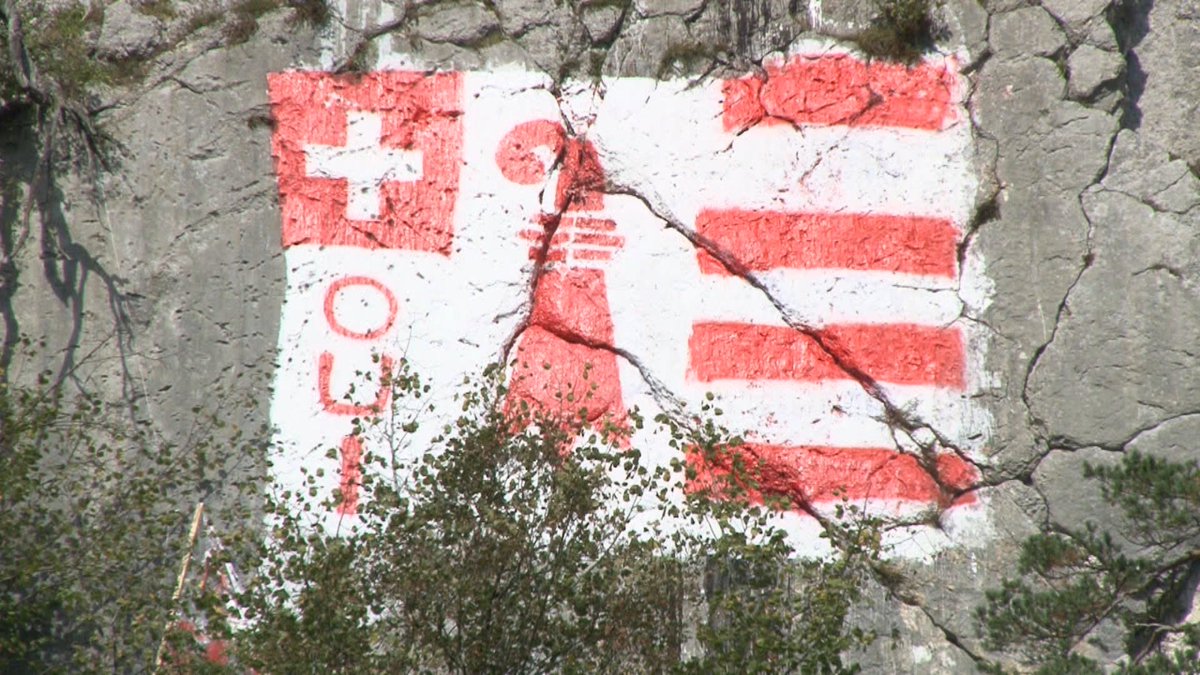
As I write these lines, we know that Moutier, a small town located, as its slogan puts it, in the «heart of the Jura», has decided by a narrow majority to join the canton. The vote brings an almost definitive end to a two-century-old conflict, since it was in 1815 that the former lands of the Bishopric of Basel were annexed by the canton of Berne. Much later, in the second half of the twentieth century, the question of identity resurfaced and flared up, leading, after a long period of tension, to the Republic and Canton of Jura's entry into sovereignty in 1979.
Lately, though less violently than in the 70s, there has been a certain amount of simmering animosity in Moutier. It wasn't up to me, or anyone else for that matter, other than the main parties involved, to determine by voting which separatists or loyalists were right or wrong. But what can be said over and over again is that questions of identity are always ambivalently linked to both security and struggle. Indeed, for the social animal that is the human being, it is vital to feel part of a community, be it religious, linguistic, national or even familial, more or less inclusive depending on personal sensitivities.
A sense of security is not possible without this sense of belonging, and peace is difficult to achieve, in the long term, if there isn't at least a minimal feeling within the group that certain values and characteristics are shared. This is the raison d'être of theoretical objects such as States, Cantons, Regions and Communes: they bring together under the same banner individuals who more or less resemble each other, sometimes very little, but who, because they belong to the same group, at least agree on this. Often, this system works incredibly well - Switzerland being a perfect example. But if a group or an individual feels excluded, for objective or subjective reasons, if they cease to find security and roots in their community, or are no longer guaranteed them, then they will fight to regain them.
This is why both an overly exclusive identitarianism and a naive communitarianism are vectors of conflict, and why the notion of a people's right to self-determination - despite the volatile nature of the definition of the word »people" and the fact that it is very rarely applied in practice - is essential, insofar as a democratic regime exists. This is what the people of Moutier should be proud of after the vote, despite the inevitable dissatisfaction of those whose opinion is in the minority: they will have been able to choose while others, elsewhere, cannot.
You'll also like






 French
  German
  English
Leave a comment