




The identity divide in Switzerland

Denise Traber and Delia Zollinger
There's hardly a European country where polarization is as strong as in Switzerland - and it's consolidated around group identities. This is not necessarily a bad thing for democracy. And here's why.
L’original article is published in German in Schweizer Monat.
As Switzerland evolved into a post-industrial society, the political party landscape also underwent fundamental changes. As early as the mid-20th century, the general level of education rose, and with it women's participation in the labour market. These developments, which were precocious by European standards, led to far-reaching social and political changes, which first affected the left-wing parties: there were fewer and fewer traditional industrial companies in Switzerland, and therefore fewer male and female workers. The traditional electorate of left-wing parties has shrunk. At the same time, another group expanded: the more educated middle class. When, from the 1980s onwards, the Green party gained strength with movements for environmental protection, world peace and gender equality, the main voters of the left-wing parties were already no longer factory workers, but teachers, social therapists, nurses and increasingly university-educated people. The rise in the educational level of the Swiss electorate also changed the composition of the «working class»: these people increasingly had a history of immigration - and less and less often the right to vote.
A second fundamental change in the Swiss party system took place in the early 1990s with the vote on the European Economic Area (EEA). A majority of voters were against Switzerland joining the EEA. The SVP was the only party in the Federal Council to oppose it. With the rise of this political formation, newly positioned as a right-wing nationalist party, themes such as national identity, migration and Euroscepticism became part of political debates - much earlier than in other European countries. While the traditional center-right parties took a rather reserved stance on these social policy themes, the new SVP established itself in the long term as a pole of opposition to the green and red left. The success of right-wing nationalist mobilization has fuelled divisions within the Swiss political system, which today ranks among the most polarized in Europe.
A divided country?
An important question, however, is whether the oppositions between the parties are also reflected in the population. It is essential for social cohesion to know in what form political debate is possible. It is also essential that political decisions - which are always compromises in Switzerland - are ultimately accepted.
Political science research distinguishes two fundamental ideological dimensions in which political attitudes and party positions are summarized: the «economic» dimension, the traditional conflict between left and right over the role of the state, and the more recent «cultural» or socio-political dimension. The latter encompasses issues of social coexistence, immigration and integration policy, and equality.
Empirical survey analyses show that political attitudes in Switzerland along these two dimensions have changed little over the past three decades, and that, contrary to popular belief, ideological polarization has not increased. Differences between the electorates of left-wing and right-wing parties are visible, but have remained relatively stable since the 1990s. The greatest divides appear in attitudes towards migration and European politics. In comparison, the differences are smaller in attitudes to economic policy. Ideological polarization has therefore not increased in Switzerland. But has the form of confrontation changed?
Behind identities lie interests
Even if ideological polarization seems to have stabilized, many people feel that political oppositions are increasingly linked to identities and charged with emotions. Recent survey data on the identities of social groups in Switzerland show that supporters of different parties are distinguished by their self-image. In the core electorate of polar parties, socio-culturally defined identities are stronger than average, e.g. identification as «down-to-earth» Swiss and «attached to their homeland» on the right, and as «open to the world» and «feminist» on the left. Among center-right voters, historically important identities such as belonging to a certain class and to the Christian religion are still important. The associated conflicts that decisively shaped the Swiss party system in the twentieth century are still with us today.th century are less polarizing today.
What, then, is new about strong, marked identity opposition? In our view, hasty, often politically-motivated diagnoses that the players are now practicing nothing more than «simple identity politics» are too short-sighted. Comparing the current context with the lines of conflict that have historically marked the Swiss party system allows for a more nuanced classification.
As in the historical conflicts between labor and capital, or around the relationship between church and state, empirical research shows that today's identity-based oppositions are linked to real differences of interest: some, for example, demand equal pay for equal work, or a rethinking of family models, while others want to hold on to traditional forms of work, life and community. These fault lines are rooted in the social structure of post-industrial society, and are successfully mobilized by political parties. When voters develop clear ideas about «us» and «them», it shows that these conflicts have found political expression and are being resolved democratically. There's something at stake in Swiss politics. People can choose between clearly defined options. And just as the «Catholic» who voted PDC in the past or the ’worker« who voted socialist, the »feminist open to the world« or the idealistic »down-to-earth Swiss« today find it easier to participate in politics and find representation for their interests than someone who can't situate themselves.
In this sense, Switzerland is a perfect example of a political landscape which, on the one hand, has undergone a fundamental transformation, but which, on the other, has already stabilized sufficiently for many people to be able to orient themselves within it. This is no bad thing in a country where political participation is demanding and voter turnout is low.
Designed for compromise
To what extent are strong and marked identity-based oppositions problematic for democracy? Polarization can jeopardize social cohesion when small groups or entire camps oppose each other to such an extent that «winning» becomes an end in itself, and substantive discussions are rendered impossible. So-called affective polarization, i.e. polarization based on emotions or identity, has grown stronger in recent years, particularly in the American two-party system, leading to a stalemate in democratic decision-making and perhaps also to a weakening of institutions.
Nevertheless, there is currently no clear empirical basis to support the thesis that affective polarization could weaken democracy in Switzerland. First of all, this concept is made up of two elements: a strong sense of belonging to one's own group combined with a strong self-image, and the rejection of another group - to an extent that makes social debate impossible. In Switzerland, politicization and debate may be emotional, but central political objectives and values are still being pursued. There is little evidence to suggest that conflict is reduced to the second component. What's more, the few long-term studies using Swiss polling data measure affective polarization only indirectly (through the proximity and demarcation of parties rather than their electorates), contain data only up to 2011, and show no clear trend towards polarization, particularly in recent years.
Secondly, Swiss political institutions are designed to encourage compromise. The concordance system and the possibility of correction via direct democracy are highly valued by the Swiss population. Political decisions are accepted even if you're on the losing side - because we know we can win again in the next vote. In Switzerland, democracy is not at risk when tempers flare.
A look through socio-political glasses
Basically, the cultural and socio-political dimension, at the extreme ends of which are the SVP and left-wing parties, remained central to the political debate in the run-up to this autumn's elections. Even the classic issues of distributional politics, such as old-age provision and healthcare costs, which are of great concern to the population, are increasingly politicized through the lens of identity: for example, when the left frames pensions as a women's issue, or when the right invokes the need to limit immigration to protect social insurance.
Strong identities are currently shaping the main lines of political conflict. Political polarization is very strong in Switzerland, as survey data on thematic attitudes and social group identities show. This can be seen as a normal consequence of extensive transformation processes, such as those experienced by the Swiss party system over the last thirty years. The activation of group identities has also always been part of election campaigns: political actors want to address certain social groups in a highly targeted way, to stimulate them and bring them to the polls. For political decision-making, it's important to recognize that «us/them» dynamics are not dissociated from concrete concerns. Political polarization is by no means a new phenomenon in recent years, but this autumn's election campaign was once again marked by it.
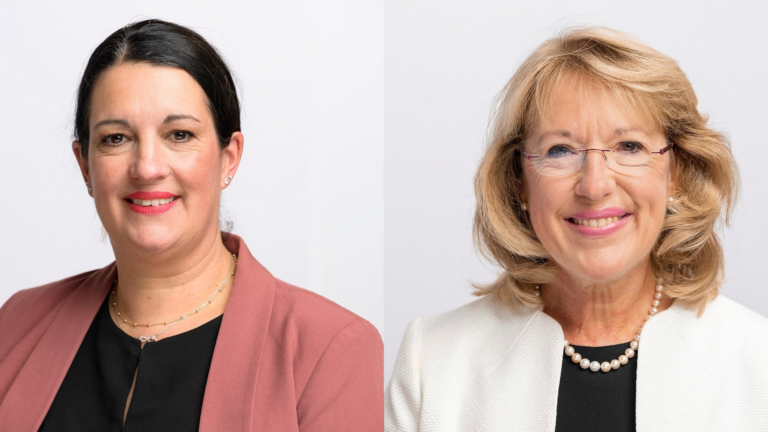
Le Regard Libre translates articles from one issue to the next Schweizer Monat, another Swiss monthly magazine of ideas, hence our partnership. Denise Traber is assistant professor of political sociology at the University of Basel. Delia Zollinger is a postdoctoral researcher at the Institute of Political Science, University of Zurich.
You have just read an analysis taken from our COMMUNITIES dossier, contained in our paper edition (Le Regard Libre N° 101).

You'll also like




 French
  German
  English
Leave a comment