



Return of the sacred: from mimicry to instrumentalization
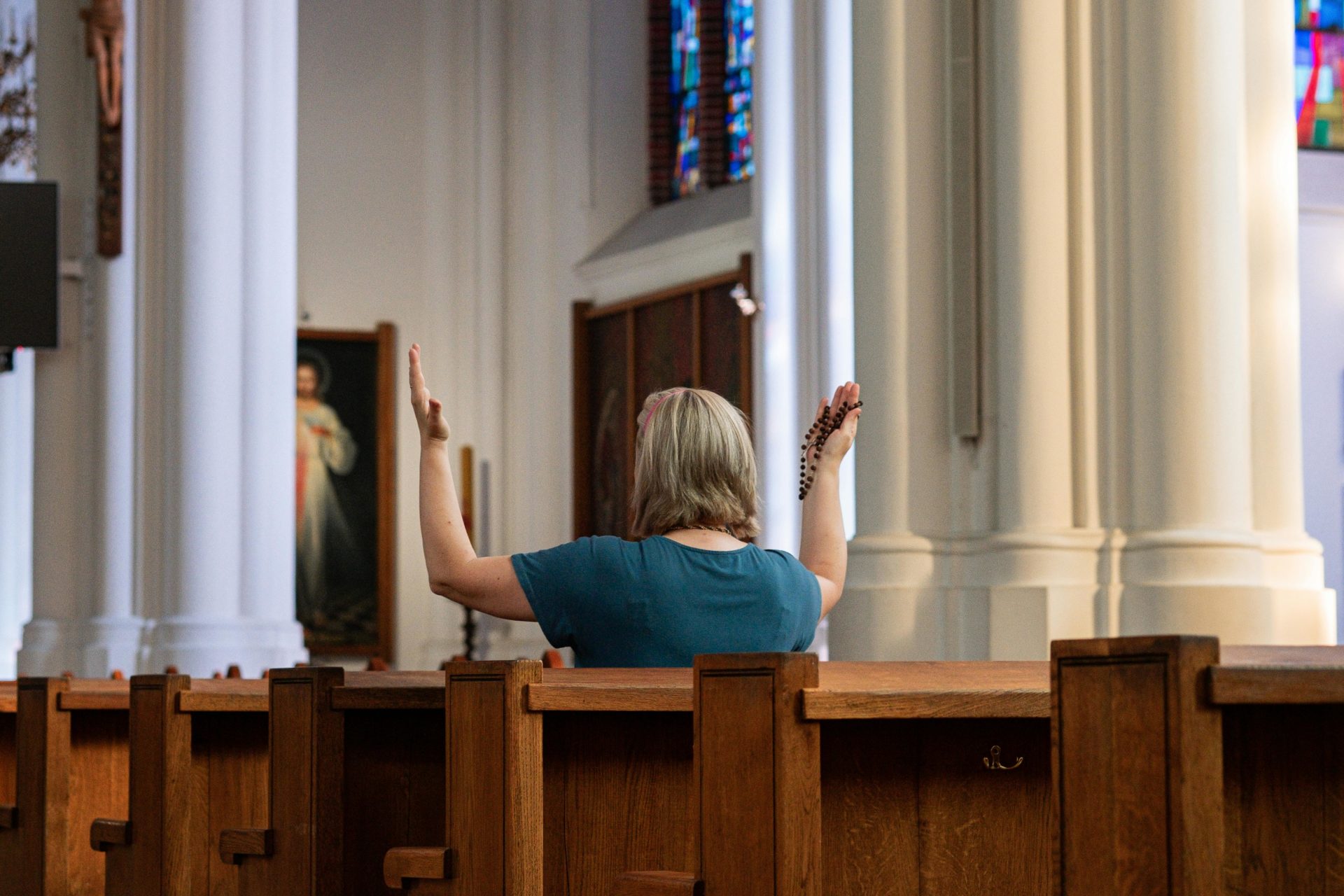
There are fewer and fewer practicing Catholics in Europe, but the use of religious symbolism is gaining ground in politics and on social networks. © Pexels
Discussions of the sacred are gradually returning to the forefront, both among young people on social networks and in the media-political world. A return that is more instrumental than spiritual.
At a time when the de-Christianization of the West seems to be continuing on the path it began at the end of the 18th centuryth In the 21st century, references to Christianity and spirituality have multiplied in the media, on social networks and in politics. This reappraisal of the sacred, particularly the Catholic, seems to stem above all from a surge of identity triggered by a feeling of submergence in the face of Arab-Muslim immigration, which has not abandoned its religion and traditions.
In 2016, a survey by the IFOP institute already pointed to a clear increase in hostility to Islam among practicing Catholics in recent years. Jérôme Fourquet, director of the institute, felt that this trend was due to «the idea of competition, of an asymmetry between the Catholic religion, which is historic but in demographic decline, and an Islam perceived as being in full demographic dynamic».
Faced with this sense of decline, the appeal of Christianity has become increasingly popular among the European conservative right, as Catholicism specialist Yann Raison du Cleuziou has observed for MarianneThis instrumentalization makes it possible to assert that Muslims will never be French or Europeans like the others (...) Religious symbolism becomes a pure instrument of identity.«
Religion as an accessory
On social networks, the «competition» between the two religions is also visible. On the one hand, rigorist Muslim preachers are making eyes at young people in European neighborhoods with videos worthy of «Salafism for dummies». On the other, through a surprising mimicry effect, a certain conservative youth has decided to claim «its» sacred Catholicity, ranging from the simple use of religious symbols to more original phenomena such as the promotion of the Christian veil by young women on TikTok.
On closer inspection, the practical application of this «TikTok Catholicism» actually resembles a poor counterfeit of Islam in its most puritanical versions. It adopts its codes, themes and formulas («may God make it easy for us»), creating random parallels between Christian and Muslim veils, Lent and Ramadan... Between rejection and imitation of the Muslim religion, Christianity becomes an accessory to be added to the conservative panoply.
If the issue were confined to a few young people in search of a framework and identity, the phenomenon would be anecdotal. However, in the background, this revival is largely fed and taken up by the political field. Within the European identitarian right, from Reconquête to Vox, via Fratelli d'Italia, Catholicism is generously exalted with slogans. But once again, the discourse rarely goes beyond the symbolic.
Christianity without Christ
In Switzerland, the SVP also sets itself up as a bulwark of Christian civilization, without showing any real interest in theological issues. In 2023, the conservative right-wing party's candidate for the Geneva Council of State, Michael Andersen, presented himself on the Léman Bleu television channel as a fervent defender of Christianity, while admitting that he doesn't go to mass for «lack of time», as if it were a somewhat restrictive meal to be placed between two client appointments.
The reference to Christianity is reduced to utilitarianism, a posture to appeal to a specific electorate. It is no more than a banner in the name of a civilizational war in which the spiritual is still seeking its place. In short, this «Christian revival» is above all the sign of an unhealthy marriage: defending Christianity and fighting Islam have virtually become synonymous.
While it is legitimate to be attached to the permanence of Western culture, Christianity is first and foremost the revelation of a universal message, which in this case is conspicuous by its absence. That it has once again become a political tool against a religious community, or a set of accessories to be grafted onto a vacuum of identity, shows just how far we are from a true and profound return to the sacred.
Write to the author: [email protected]
You have just read an open-access article from our SACRED folder published in our print edition (Le Regard Libre N°106). Debates, analyses, cultural news: subscribe to support us and get access to all our content!
You'll also like




 French
  German
  English
Leave a comment