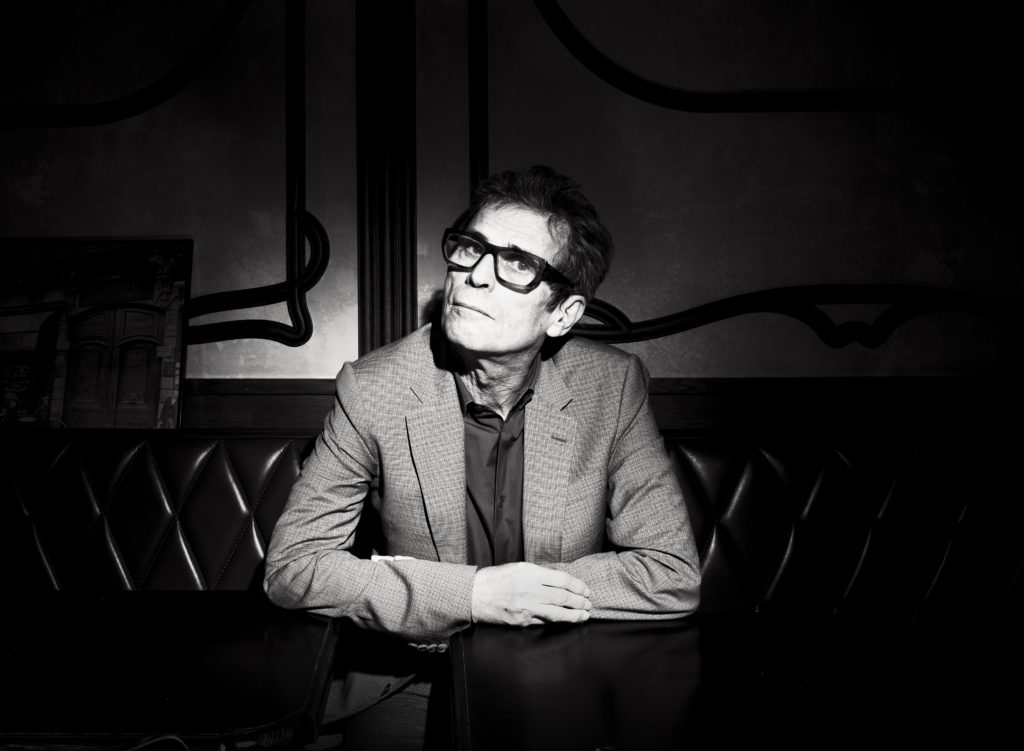
The host of the late cult TV show «Ce soir ou jamais», who takes over the helm of «Marianne» magazine on March 1, is publishing a series of volumes with Grasset, each listing what celebrities did at a particular age. Autumn meeting in Paris.
The December 2024 issue of Regard Libre inaugurates a new paper. Recycled, less clinically white and more embossed, this material is consistent with our monthly feature, dedicated to the value of age, and marks the beginning of an evolution in our media.
The way a question is posed plays a major role in public debate. This underestimated dimension of contemporary discussions in particular explains many of its outcomes. Confusion has taken its toll on the debate of ideas in recent times.
Supposedly ultra-liberal, this magazine is also hostile to «queer rights», at least according to the latest article by this Lausanne University professor and star of environmental activism. An opportunity to remind ourselves of our values.
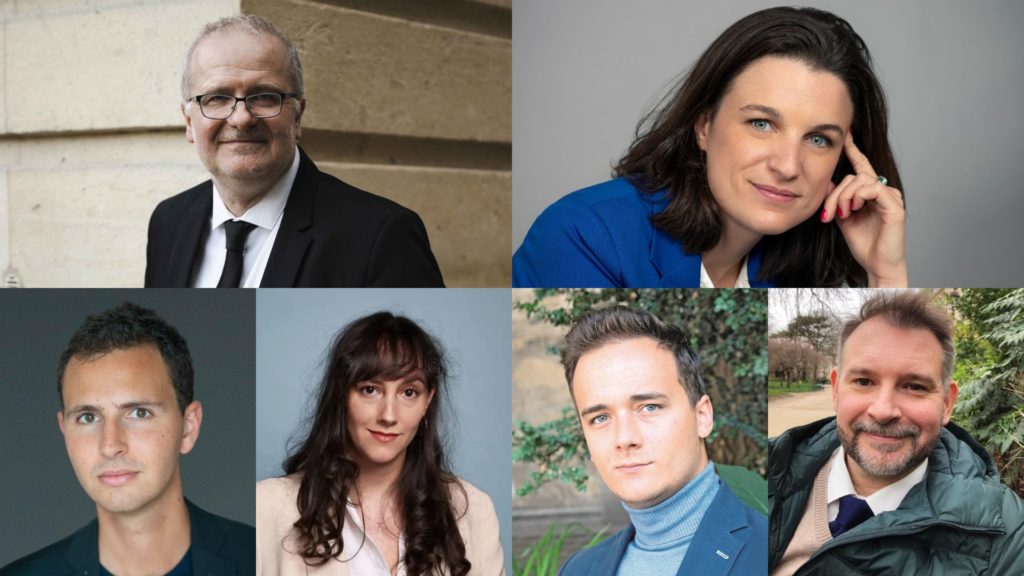
The dictatorship of feelings, the virtues of intoxication, lessons from Swiss history... From March 6 to 10, our editor-in-chief Jonas Follonier invites you to Geneva's Centre Palexpo for five meetings dedicated to intellectual conversation.
First published in January 2014, Le Regard Libre, which has never changed its name or mission, has nevertheless evolved from a student magazine to an intellectual magazine present on the media scene. It's time to reveal a little more about what goes on behind the scenes.
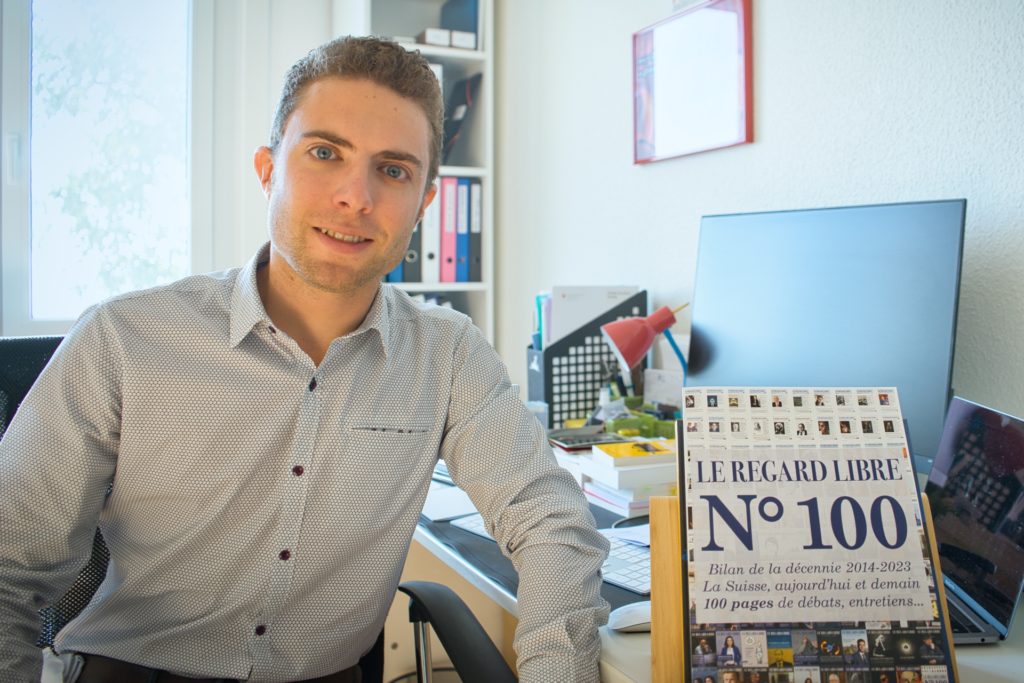
On the occasion of this 100th issue, let's celebrate pluralism, and its corollaries, tolerance and freedom of expression. When «Regard Libre» was created, we could never have imagined the extent to which these watchwords of our magazine would need to be defended.
Next January, Le Regard Libre will be ten years old. It will soon be a decade since a small team of editors brought this volunteer journalistic project to life, month after month. Despite a modest subscriber base, which is growing slowly but surely.
Fake news stuns political players and observers alike. But isn't it true that lies, whose definition is often relative, are part of history? Only knowledge, debate and argumentation can break down its damaging potential.






 French
  German
  English