Provocative dandy and observer of his times, Quentin Mouron questions progress and decadence in his novels. Meet a lucid writer who dismantles modern illusions without renouncing the beauty of the word.
ARTICLE LONG FORMAT, Ivan Garcia | In two of his novels, Quentin Mouron stages the adventures of a cynical private detective who, despite his flair, is often off the mark. A way of depicting the contemporary loss of meaning.
According to sociologist Michel Maffesoli, who spoke on the March 9 edition of «Face à l'info», we find ourselves at the crossroads of two eras: a time of quantity may be returning to a time of quality. If so, perhaps the 21st century will be that of the novel, which alone is capable of expressing unquantifiable truths. In many respects, and perhaps surprisingly, «99 francs», Frédéric Beigbeder's novel denouncing the tyranny of advertising and inaugurating the trilogy featuring Octave Parango, can be read according to this very conception of the novel - that of Milan Kundera.
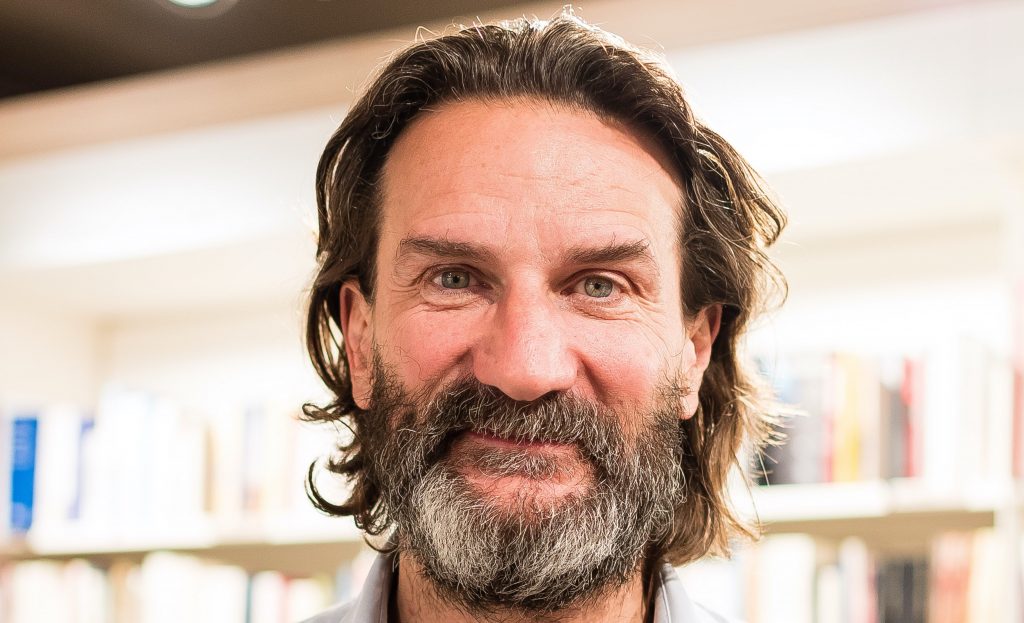
On the occasion of the presentation of the final part of his trilogy devoted to Octave Parango, Frédéric Beigbeder takes us on a journey in the footsteps of this literary double, sharing his criticism of the dictatorship of laughter and his passion for the novel.
Before his critique of the «society of sneers» in *The Man Who Cries with Laughter* (2020), but after his escapades as a cocaine-addicted advertising executive in *99 Francs* (2000), Octave Parango spent four seasons in Russia. In *Au secours pardon* (2007), Frédéric Beigbeder’s alter ego is as wretched, funny, fascinating, despairing, horrible, tragic, pathetic, and touching as ever.
With «L'Homme qui pleure de rire», the author paints a fresco of the last decade. Unflinchingly critical of what he calls «the dictatorship of laughter», Frédéric Beigbeder has penned a funny, philosophical novel set in an end-of-the-world Paris. One last nocturnal jaunt for Octave Parango.









 French
  German
  English