




Octave Parango's last night out

With The man who cries with laughter, the author paints a fresco of the last decade. Unforgiving towards what he calls «the dictatorship of laughter», Frédéric Beigbeder has written a funny, philosophical novel set in a Paris that looks like the end of the world. One last nocturnal jaunt for Octave Parango.
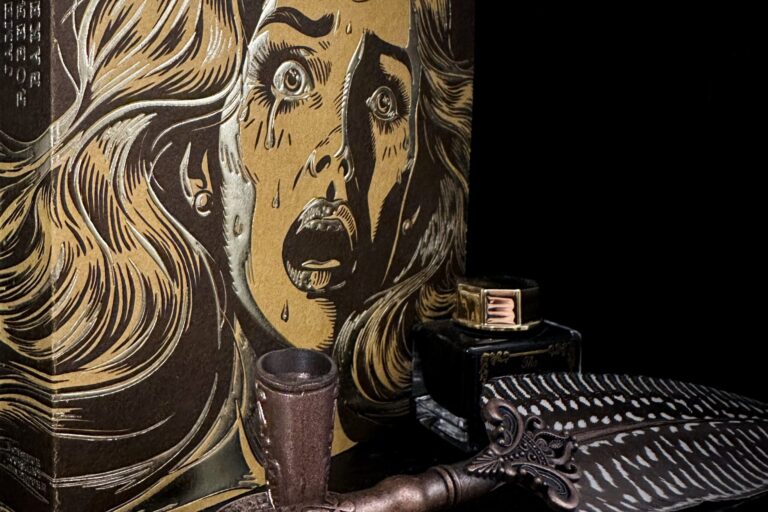
An emoji, The man who cries with laughter, as its only cover. This book by Frédéric Beigbeder was a curious find. Intrigued, and having never read anything by this author, I bought it in my usual bookshop. You've got to have quite a sense of humor, I thought, to put a smiley face as the only title. It reminds me of a scene from the series Mr. Robot in which the protagonist sees that people on the subway have had their faces replaced by emojis. The final part of his Octave Parango trilogy, after 99 francs and Help, I'm sorry, The man who cries with laughter takes the reader on a final Parisian evening with the hero. We'll stroll along the Champs-Elysées, get drunk at Fouquet's, «Sarko's restaurant», take part in a ’fluorescent vest« demonstration, see a show at Crazy Horse, or party at Raspoutine. If you get lost along the way, a map at the beginning of the novel will help you find us!
«My name is Octave Parango and I'll be seventy-four in twenty years.»
The carousel of memories
After the advertising world and his Russian escape, Octave has grown old. He's back in France, and has turned humor columnist on France Publique's «La Matinale». He is «France's most listened-to humorist». What a surprise! But Octave is tired of playing the clown. One morning, he decides not to prepare a column. The ultimate sabotage in a world where humor has become the rule, subject to efficiency. Obviously, things don't go well for Octave, who ends up getting fired... live! The resemblance with the experience of author Frédéric Beigbeder, who was also fired from a radio station for not having prepared a column, is not coincidental...
«Subversion today is to be the opposite of the Joker. The Man Who Suffers? The Man Who Burns A Newsstand? The man who doesn't speak ill of anyone. The man who believes in something, gets down on his knees and prays. He's the real renegade: the one who keeps us from laughing in circles.»
The author had never never explained why he hadn't prepared a text that morning. Embracing the mask of fiction, he retraces the journey to the end of the night that his literary alter ego the day before. The book is divided into time slots, from nine in the evening seven in the morning. Thus, the day before, Octave wandered around Paris, where he had a series of adventures.
When I read the novel, I felt caught up in a merry-go-round. The merry-go-round of the last decade, which, as it turns, makes me relive or revisit the key events of the 2010s. The Weinstein affair, decadence, the probable collapse of our societies, sexual misery and the death of desire, totalitarian humor, criticism of the heterosexual white male and feminism, the works of Houellebecq and Virginie Despentes, the «gilets jaunes», the attacks of Charlie Hebdo, Le Joker by Todd Philipps, La Ligue du LOL... The list goes on and on, and would deserve further development. But there's no time for that. As Octave says, «the world is going to end in ten years, no one has any more time to waste.»
Read also | Visit Jokeras disturbing as it is breathtaking
One last party for the road
With delight and nostalgia, he recalls his youth, his parties with «Le Caca's Club», his group of young, rich buddies with whom he did the four hundred tricks. In addition to memories of friends, lovers and parties, Octave sets his discourse in dialogue with literary works, from the novel The Name of the Rose from Umberto Eco to Submission by Houellebecq and American Psycho by Bret Easton Ellis. On this subject, Frédéric Beigbeder, interviewed in our edition to be published next month, explains his love of the novel and his fascination with American authors. Stylistically, each hour is assigned a quotation. As if to inscribe it under a certain author or a particular sign, from the song Le Bal des Laze by Michel Polnareff at Joker by Todd Philipps. The fresco of laughter is long. And Octave, in the midst of this field of ruins, is looking for his ideal. The one that will allow him to live happily. At last.
The man who cries with laughter was my first foray into Beigbeder's work. And I don't regret it. In fact, I loved it. You end up becoming attached to Octave, this Mr. Nobody who's like a lot of us, deep down. This novel was an opportunity to bid farewell to a certain decade with a party. A last night out, in the heart of Paris, with Octave Parango.
«Holidays are more than just parties. Time embellishes memories. Uninteresting on the day of their publication (except to note the damage done to the cheeks by alcohol abuse), society columns become magical three decades later. Photo albums become ghost catalogs. A photograph of a forgotten ball is a rediscovered youth.»
Photo credit: © Jonas Follonier for Le Regard Libre
Write to the author: [email protected]

Frédéric Beigbeder
The Man Who Cries with Laughter
Editions Grasset & Fasquelle
2020
320 pages

You'll also like




 French
  German
  English
Leave a comment