Tales of the end of the world have been told throughout the ages, and still exist today. These dire predictions conceal...
What if Europe lay in the antagonism born of the Renaissance between the Christian and scientific worldviews? This opposition has always been present in different forms at different times. Today, it has taken on a new dimension: some argue that a materialistic reading of the world is now impossible, given current physical theories.
The frontier, increasingly decried in Western countries over the past sixty decades, is now making a comeback. Talk of a world without borders is no longer so appealing, for a number of reasons. Russia's invasion of Ukraine is a powerful demonstration of the absurdity of talking about independence without territory. What's more, it's clear that the idea of a united Europe in the face of the many challenges of our times (war, terrorism, immigration...) requires recognition of its external borders, which are extensions of the internal borders of the countries that make it up. Borders are the markers of a country's history: they define its contours, not only geographically, but also culturally. At least, that's the idea behind Régis Debray's Eloge des frontières.
DOSSIER «LE GRAND RETOUR DU NUCLEAIRE», Jonas Follonier | Classical Liberal? Libertarian? In any case, he's one of those people the press likes to refer to as «neo-liberals» or «ultra-liberals» - not necessarily nice labels. But at Regard Libre, we're not really interested in labels and how nice they are (or aren't). Here's a political and economic analyst who counts, who is a frequent guest in the French media (and not just L'Opinion or Le Figaro) and whose essay, published in 2021, Les écologistes contre la modernité, is fascinating. We may find ourselves in profound disagreement with some or all of his opinions. However, a confrontation with his viewpoint can only be stimulating. This book offers a thorough critique of the anti-capitalist foundations of radical ecology, including the author's fiery, well-argued plea in favor of industrial society and nuclear power.
Each month, Le Regard Libre presents a philosopher whose thinking is different from, or even the opposite of, that of...
For a long time, humans judged animals according to their own way of thinking, generally to assert their supremacy over them. It wasn't until the twentieth century that animal behavior was systematically studied and a balanced judgment could be formulated. Today, science provides us with a more nuanced vision. And most of our major certainties - that laughter is a human trait, that animals have neither culture nor morals, that the tool makes the man, etc. - are now outdated. - are now outdated. Here we present some of the most surprising discoveries, such as animals« ability to use symbols, or their sense of empathy and cooperation. Scientific facts that bring them closer to us and help us to understand ourselves better.
Le Regard Libre No. 84 – Antoine Bernhard Special Feature: «Man and Animal» This is a call that is gaining traction today: we should...
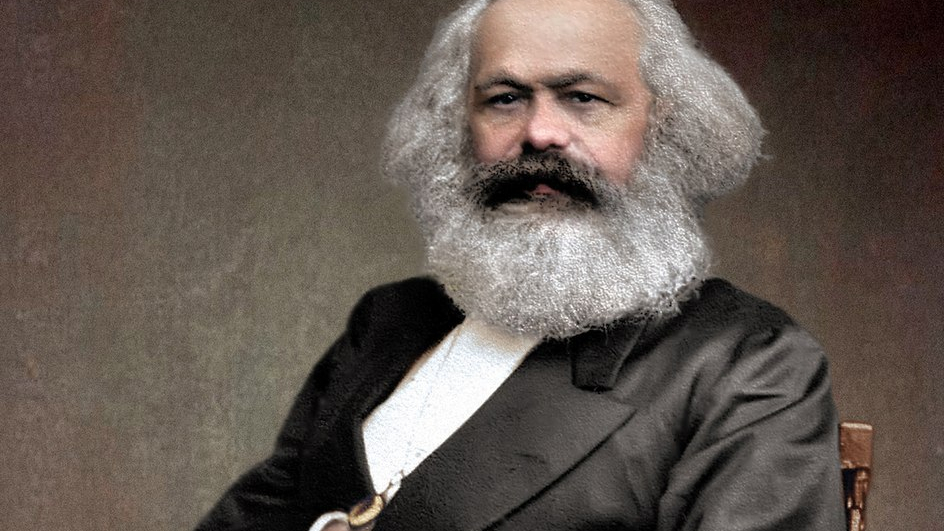
ANALYSIS, Olivier Meuwly | «It could be argued that the capacity of capitalist regimes to reform is partly due to Marx himself», asks Raymond Aron in his famous lecture on Marxism by Marx, delivered at the Sorbonne in the early 1960s, then at the Collège de France a decade later, and published in 2002 by Jean-Claude Casanova (Editions de Fallois). Is Aron indulging in his customary irony? Or are we to wonder whether, behind the provocative aphorism, lies not only the profound admiration that the great French liberal has always shown for the founding father of «scientific socialism», but also a warning to those who profess to analyze... or practice this same capitalism?
LONG FORMAT ARTICLE, Danilo Heyer | We often hear the refrain: «We must be neither pessimistic nor optimistic, but realistic! So let's not sugarcoat the future. But it's an inadequate position for anyone who wants to know whether the world is essentially good or bad; whether life is worth living; whether existence can be justified. To do so, one would have to make a metaphysical judgment of which this realism is quite incapable. Arthur Schopenhauer, the 19th-century German philosopher, is best known for his radical pessimism. But would he have offered the world anything more than an embittered philosophy, as is sometimes claimed? A careful reading reveals a surprising mix of pessimism and optimism at the heart of a practical philosophy that proves lucid and of great help to everyone. After all, is happiness attainable?














 French
  German
  English