The University of Toronto psychology professor, the clinician, the youtuber with over four million subscribers, the speaker who attracted no less than half a million listeners to 160 venues in one year, and the author of the bestseller 12 Rules for Life: An Antidote to Chaos, recently published 12 New Rules for Life: Beyond Order. I'm talking about Jordan Peterson. What does this figure from the intellectual dark web bring to this sequel? And what can we say about his thinking, given that the overwhelming majority of the mainstream media misread his previous work as much as they criticized it with sophisms of all kinds?
ARTICLE LONG FORMAT, Antoine Vuille | Each month, a guest editor examines a cliché about a philosopher. For once, this article focuses on a prejudice about philosophy itself. To understand what this discipline is and what it's for, we need to break down two clichés about it: the first concerns its object, the second its method.
Le Regard Libre N° 77 - Enzo Santacroce «Prejudice against philosophers» series, episode #2 If ever there was a philosopher...
Each month, Le Regard Libre presents a philosopher whose thinking differs from, or even runs counter to, the clichés that circulate about him. Historian Olivier Meuwly opens the ball by arguing that Georg Wilhelm Friedrich Hegel did not advocate an authoritarian state. On the contrary, our guest editor locates certain theoretical foundations of liberalism at the heart of the Hegelian system. Direct democracy itself is no stranger to the German's vision, according to the historian.
Communitarian discourse, currently in vogue and carried by minorities in need of an existence rather than victims of real repression, is torpedoing the fine 19th-century idea that the freedom of minorities should be preserved and defended, by transforming it into a weapon against freedom of expression, which includes, among other things, the right to humor. It is to be feared that the controversy provoked by French-speaking comedienne Claude Inga-Barbey's sketch dramatizing the difficulties of naming gender transformations illustrates an era marked by the thought police. From a philosophical point of view, this situation conceals an opposition between two types of universalism, that of proclaiming the rights of Man versus the rights of men.
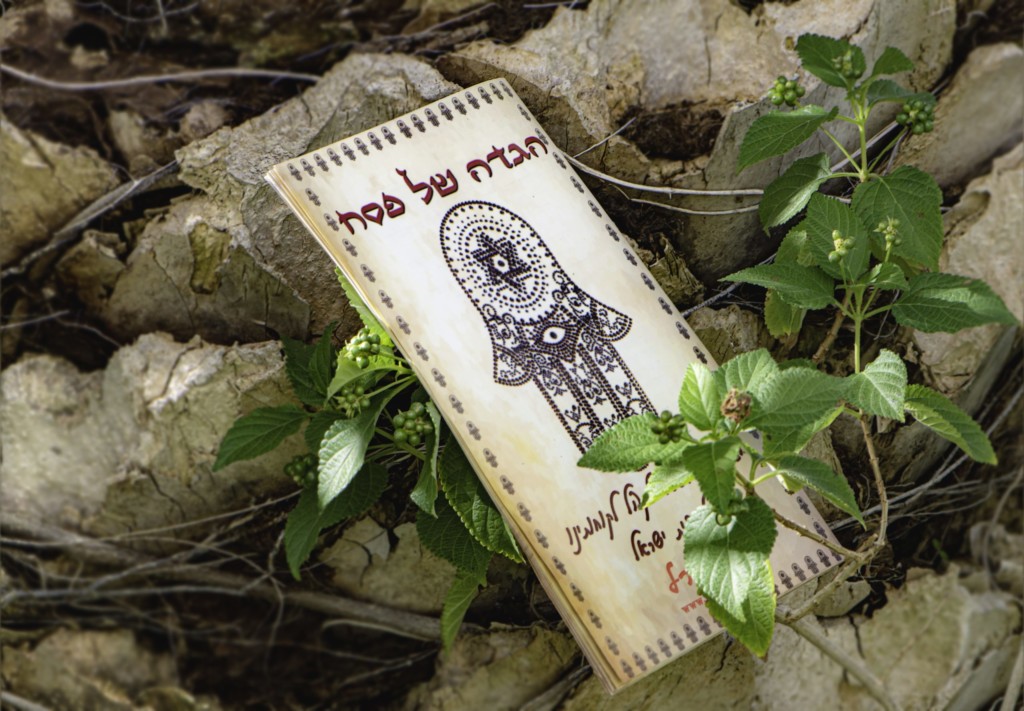
LONG FORMAT ARTICLE, Eugène Praz | A few weeks ago, many of us celebrated Easter. We often wonder where it comes from. But where is it going, and what does it mean in our time? Here's a look at the intersection of Christianity and Judaism.
We recently celebrated 50 years of women's suffrage in Switzerland, an opportunity for us to take another look at the place of women in today's world. While women occupy an increasingly important place in society, there are data that seem to indicate a stagnation in the consideration and recognition of what they actually want and should be. This ambivalence in the advancement of the female cause can become the anchor for a new reflection on the meaning of the female body. It is this conversion of gaze and point of view that we wish to present here.
With the progress of science, particularly neuroscience, the possibility of free will is increasingly called into question. Every day, we discover new determinisms, i.e. conditionings to act in a certain way in a given context. Man's capacity for self-determination, which we hold so dear, may appear to be nothing more than an illusion. But before modern science got to grips with it, the question of free will already had a long history. Let's go back to the origins of a founding idea in the history of the West.
LONG FORMAT ARTICLE, Jonas Follonier and Lauriane Pipoz | Can philosophy help us manage Covid-19? Yes, thanks in particular to John Rawls' theory of justice. This English philosopher proposes a thought experiment aimed at finding the principles of a just society. Applied to the management of the virus, it raises the question of whether the Federal Council's decisions meet the standard of impartiality, which is the only way to protect everyone's interests - including their freedoms.









 French
  German
  English