




Are you ready to believe in the return of the «Messiah»?
Saturday's Netflix & chill - Loris S. Musumeci
The fervent expectation of the return of Jesus Christ, the Messiah, is sung every Sunday in Christian churches around the world. The Jews, who did not recognize Jesus of Nazareth as the Savior, are still waiting for their Messiah. In Islam, particularly in its Shiite branch, we wait for Al Mahdi. He will be the twelfth and final imam, the last successor of the prophet Mohammed. Allah will send him to Earth in a time of turmoil, towards the end of the last days.
Enough theology to come to the Netflix series Messiah. So everyone's waiting for the Messiah. And that's what the ten episodes of the first messianic season released earlier this year are all about. Because the Messiah has returned. At least, that's what some people believe. At least, that's what we assume. The entire first season oscillates between enlightened belief and skepticism. For the protagonists, and for the viewer.
Follow the Messiah
Syria, nowadays. War, misery, Daesh. A town is about to be ravaged by Islamist tanks. A windstorm stops the assault dead in its tracks. In the midst of this storm stands an unshakeable, fixed man. He speaks to the crowd sheltering from the wind. A message of hope and peace, but also a radical warning of the suffering to come for mankind. A group of men and women are seduced; they decide to follow this figure whom they acclaim as the Messiah. They follow him to the Israeli border, where trouble begins for them.
From the border, we find the Messiah in Jerusalem, esplanade of the Mosques. An Israeli policeman shoots a Palestinian child. And then the second miracle happens. The Messiah passes his hand over the child's mortal wound and heals him. He then disappears to a village in Texas, where further miracles provoke both fascination and distrust of this mysterious figure. In the U.S., things take off. The Messiah's arrest, trial, release, then preaching in the heart of Washington, all the way to the White House. The eyes of the world are on this man, who at this point can only be the Son of God, or the most gifted of impostors, the most dangerous sower of strife.
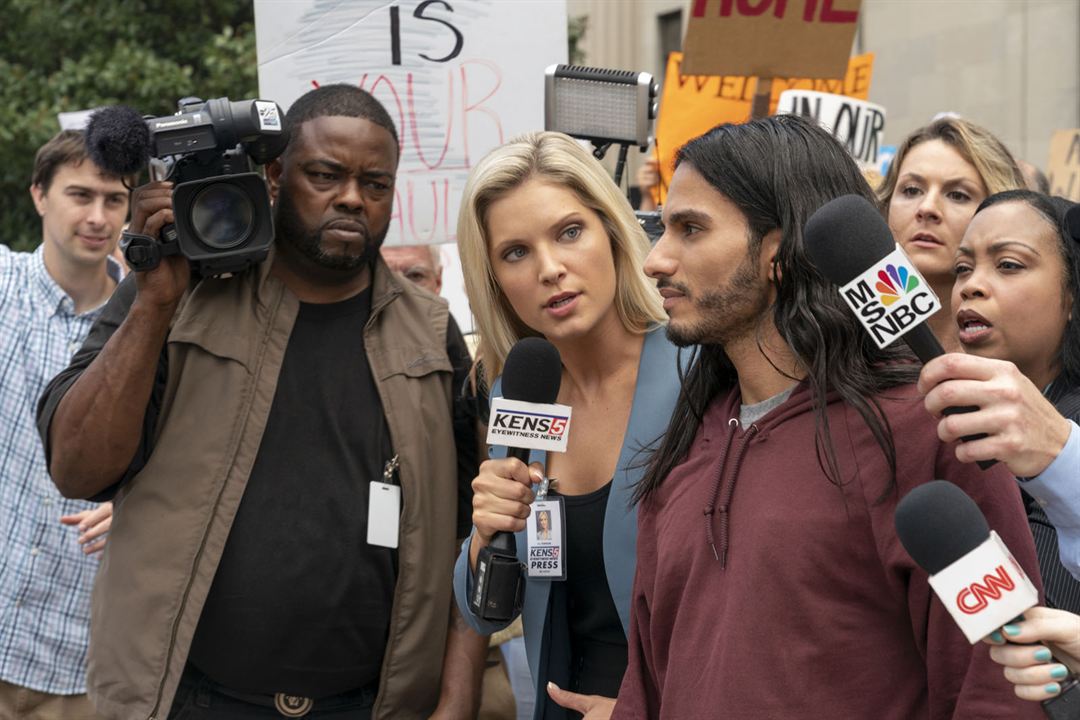
The viewer is captivated
In any case, by producing such a subject, Netflix shows its openness to all kinds of themes. No, it's not all fisticuffs and sex on the platform. It's true, though, that when it's the return of the Messiah that's being dealt with in a mainstream series, you can expect a lot of nonsense. Well, this is not the case. Messiah has its share of clichés, flaws and even enormities, but it's certainly not an uninteresting series.
Le spectateur est captivé. Il ne peut que difficilement s’arrêter après un épisode. Chaque fin d’épisode appelle avec urgence le prochain. Vous me direz que c’est le but d’une série. Je vous répondrais que c’est le but auquel parvient une série réussie. Le réalisateur Michael Petroni a été blâmé pour blasphème par quelques bigots, mais personne n’a pu lui reprocher le découpage en épisodes de sa première saison. La procédure est assez classique. On coupe à un moment fatidique, puis on reprend l’épisode suivant par un prologue sans réattaquer directement l’action en cours dans l’épisode précédent.
And even in terms of other formal elements of the production, there's really nothing to criticize Petroni for. Messiah n’a pas la photographie d’un film d’auteur, c’est certain, mais la mise en scène comme les décors relèvent d’un bon niveau. Surtout pour les scènes de désert, où l’on s’y croit vraiment. On est réfugié avec les réfugiés dans l’étendue chaude et infinie, en suivant un Moïse ou un Messie sans savoir ce qui nous attend.

Messiah in training
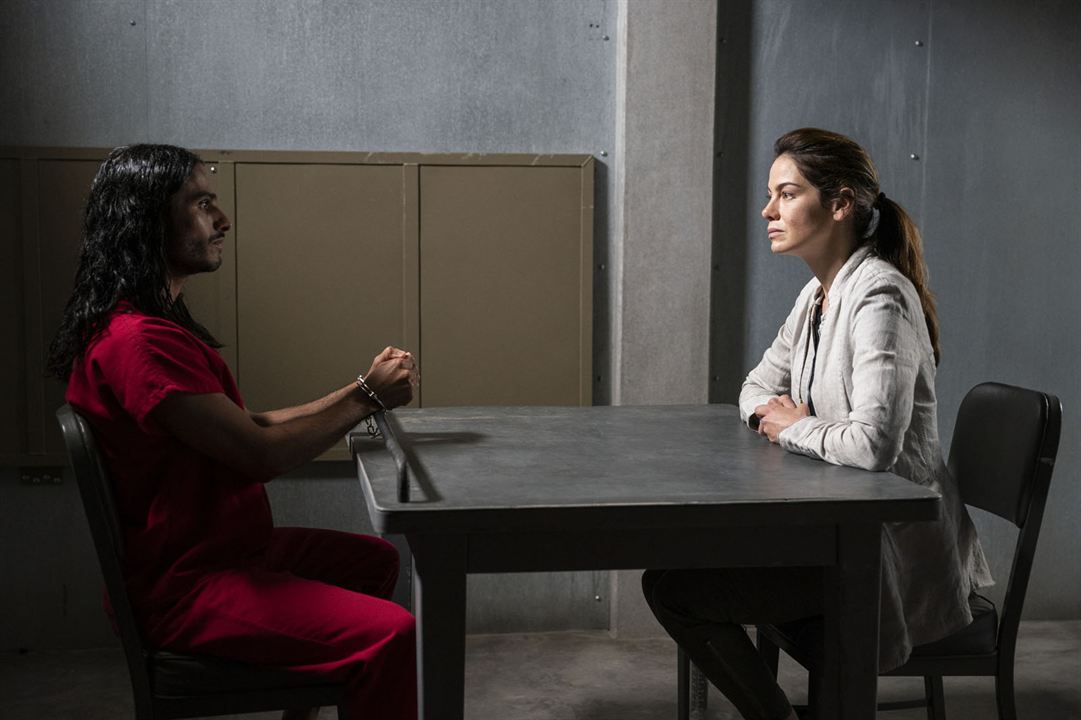
The characters' construction seemed rather caricatured and superficial in the first two episodes; however, their complexity is revealed as we get to know them a little, as we follow them. Whether it's CIA agent Eva Geller (Michelle Monaghan) or Israeli secret service agent Aviram Dahan (Tomer Sisley). Both are chasing the Messiah, but there are many other ghosts haunting their respective personal histories.
Le pasteur texan et sa famille que vient visiter le Sauveur réservent les plus grandes surprises au niveau de leur évolution. Et l’acteur qui joue le rôle du pasteur (John Ortiz) est le plus émouvant et le plus prenant de tous. Le plus marquant qui montre à travers les seules expressions de son visage le plus amer désespoir mêlé de la plus lumineuse espérance pour lui, pour sa famille et pour toutes les personnes qu’il aide et qu’il assiste.
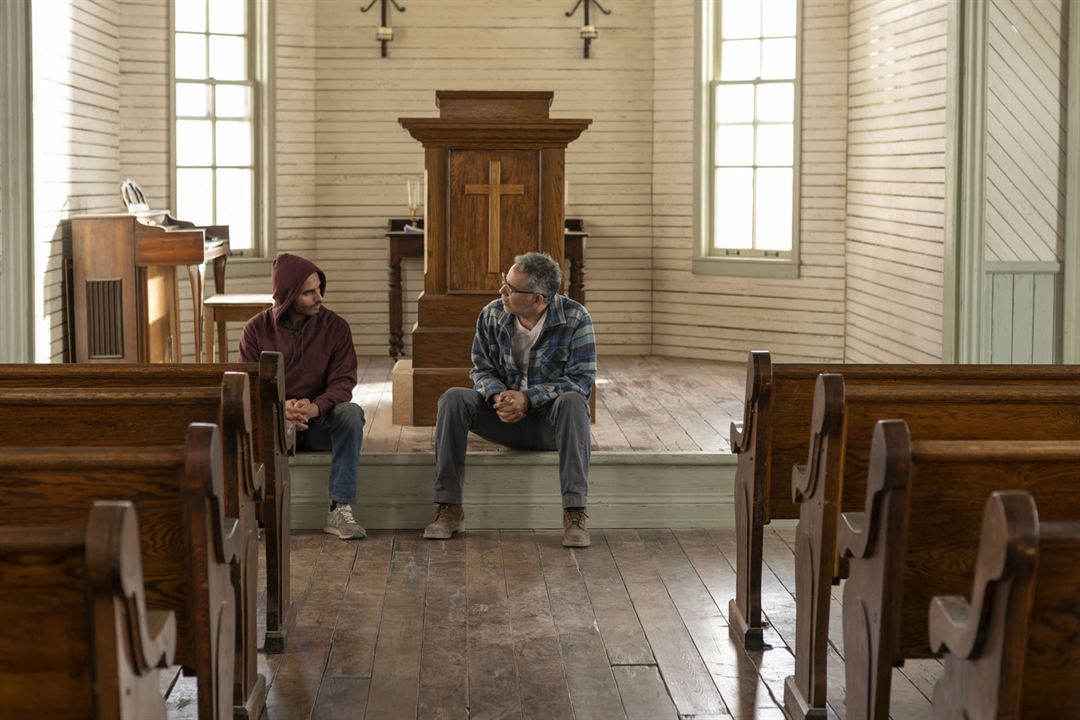
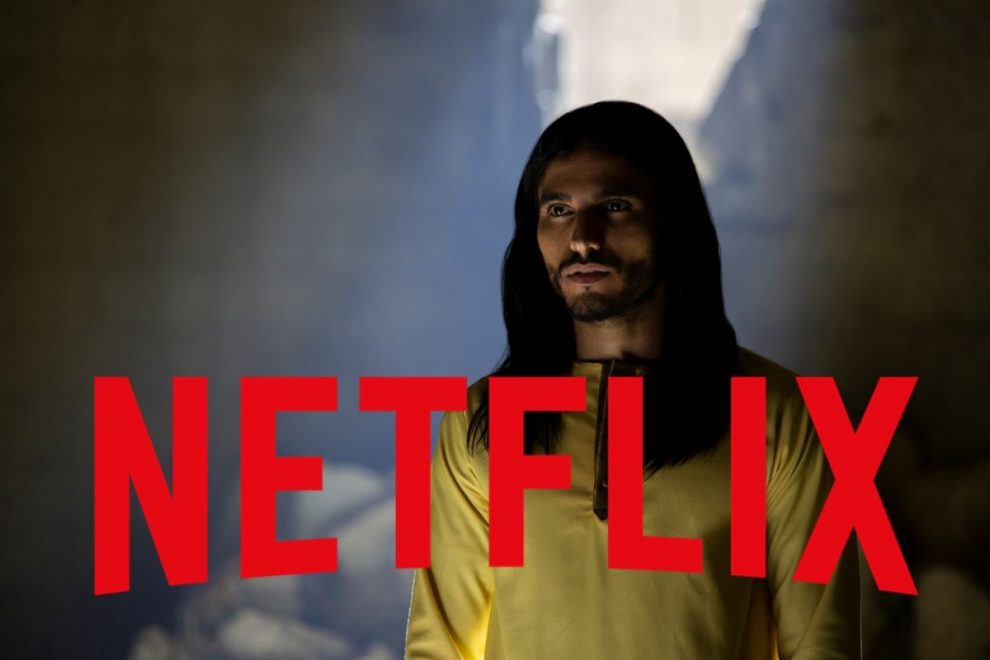
And what about this famous Messiah? Well, if I tell you he's got a beard, long hair and looks like a hippy, you'll say he's a caricature. Yes, Al Massiah has all the makings of a redundant Christian figure. But let's drop the toga, the djellaba or any other dress and move on to the training bien de la street, a very fashionable character. Beyond his appearance, this character is interpreted with great conviction by Belgian actor Mehdi Dehbi - once! - who knows how to make his Messiah just as profound and tough with his elusive eyes as he is unbearable with his elusive words.
Messiah is vague; he always evades questions, either by answering them too simply, or by taking detours that lead nowhere. He doesn't even answer the question of whether or not he is the Messiah. He's content to say «you're the one who says so», or «if it's God's will», or other such loopholes. This is what fascinates the followers who drink in his words; it is what annoys those who see in him only a clever man, an impostor, who manipulates a flock of lost sheep to his own ends. In this respect, the resemblance with the figure of Jesus in the Bible is quite apt.
Too American-centric
Except that Netflix's Messiah is far more politicized than Jesus. Even a little too much so. This is not a criticism of the fictional character created by Michael Petroni, but of Michael Petroni himself. The voice he gives his main protagonist when he talks about US foreign policy is hardly worth a pub chat. It's all about grand assertions, grand theories that obviously lead to the conclusion that the Americans and their soldiers aren't very nice, and that in the end, if the USA withdrew its troops from the Middle East, peace would reign throughout the world.
From a political point of view, then, the script doesn't accomplish much; it's more content to spout banalities, most of which are false. Not to mention that the only countries mentioned are Israel, the Palestinian territories, Syria, Iran, Russia and the USA. Thanks for the rest! So, Christ, it's good for the CIA, Mossad, but it doesn't matter about the rest. All in all, too American-centric.
The heart of Messiah remains the question of the Messiah's return, and even more so of his reception by mankind. But this question is posed in a work of fiction. So it makes no sense to cry blasphemy or whatever. In a novel, as in a film, you build the character you want as you want. You draw the features of the Messiah, the Christ, a terrorist, a magician, an impostor or a madman as you wish to show them. At worst, a touch of indecency or bad taste will be denounced.
Are you ready?
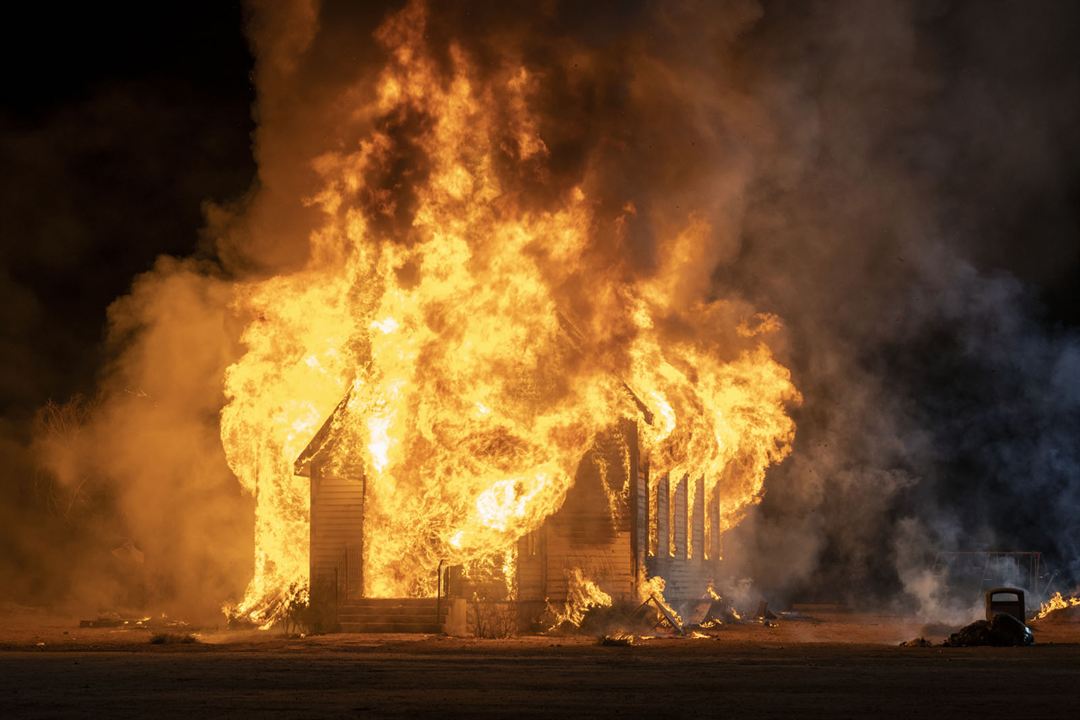
Be that as it may, nothing would seem more far-fetched and out of place than a Messiah these days. And yet, the religions that have shaped, embellished and deformed the face of the West and the Near and Middle East await his coming. How would you react today if you had the Messiah face to face? Would you believe him? Would you follow him? Would you entrust everything to him, starting with your own life, after seeing him give sight to the blind and breath to the dead? Would you be ready to accept the madness of a God who is so far away as to be so close, so close as to become human among humans?
What if this Messiah were, on the contrary, the most perfidious, the most perverse of impostors? Would you be ready to resist his temptation? Would you be able to recognize this false prophet throwing real smoke and mirrors in your face? Would you know? Would you know what to do? Would you know how to act correctly?
Can you listen in your heart to the voice of a man who tells you «the way, the truth, the life»?
Write to the author: [email protected]
Photo credit: © Netflix
You'll also like



 French
  German
  English
1 comment
Not a bad series to watch.
Quant au messie je l'ai connu, j'ai sa date de naissance.
C'est une date soi-disant secrete. De ce fait, ça a fuité de chez les francs maçons... Apparemment eux savent également que son retour en "public" aura lieu en 2022 car ce sera alors l'armageddon sur la Terre...
Leave a comment