



Existing and belonging to others, the only way out
Constantly swaying between the laws of attraction and repulsion, Thomas Flahaut's characters, in his latest book Summer nights, are shocking in their realism. What's more, they reveal the daily lives of cross-border workers in the Franche-Comté region.
In literature, there are novels that move readers with their faithful portrayal of reality. They address universal themes that are part of everyone’s daily life—that is, yours, your next-door neighbor’s, your insurance agent’s, or your psychiatrist’s. These themes include work, love, friendship, and the relationships that stem from them. When it comes to work, we could talk about social struggle, workers’ demands, and the middle or working classes. As for the rest, we could talk about caresses, kisses, and embraces. Reviving the realist novels of yesteryear—those of Balzac or Zola (let’s not shy away from the big names)—, Summer nights, in the pulsating vein of a Nicolas Mathieu, to name a living person, takes place between Franche-Comté and the Swiss Jura, between Besançon, Audincourt, Montbéliard, and the Lacombe factory, which hires cross-border workers to do grueling work that the Swiss don’t want to do.
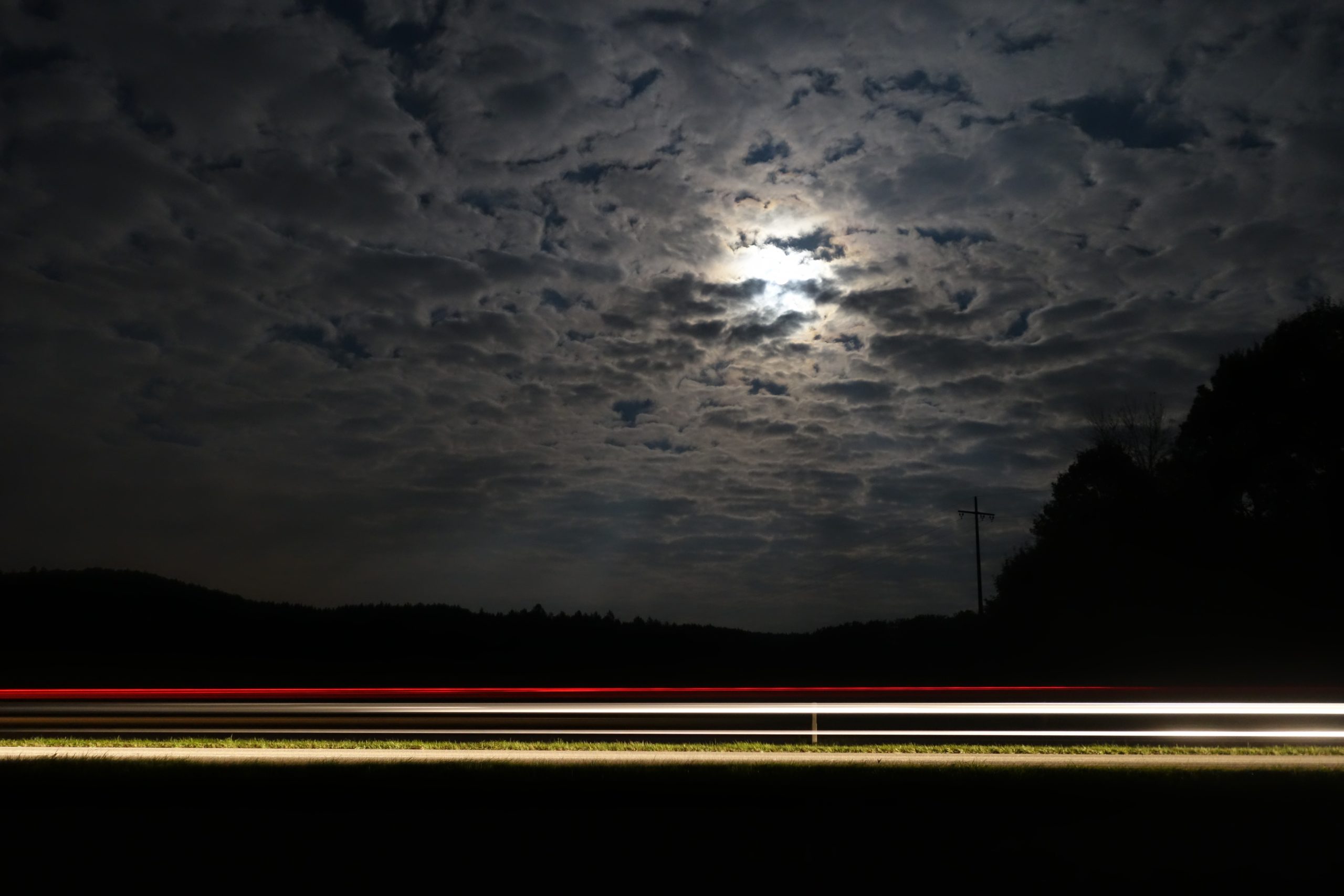
Three childhood friends in their twenties—Mehdi, Thomas, and Louise—are from the same neighborhood, Les Verrières, in Montbéliard. One summer, mostly at night, their lives are split between two countries. Constantly on the road and traveling along the Transjurane highway that connects Switzerland to France, they let themselves be guided by what draws them together and what pulls them apart—each with their own personality, hopes, and illusions, yet all connected to the Lacombe SA factory. The factory, like a dark, mechanical spider, binds them together until the very end. As the story unfolds, they shed light on a current social reality—that of today’s cross-border workers, whom we might more accurately call «temp workers,» whose role is no longer the work of yesterday, industrial and assembly-line work, but rather to assist massive autonomous machines that produce parts as if by magic.
«L’atelier C est moins une ligne qu’un damier. Des îlots de machines toutes identiques reliés entre eux par des allées. L’atelier ne correspond pas à l’idée que Thomas s’en était fait. Il s’était figuré une suite de postes placés le long d’une chaîne se déroulant sous le haut plafond d’un hangar, une alternance de mouvements et d’arrêts, le fracas des tôles frappées. Mais cette usine-là a disparu depuis longtemps. Elle appartient à la vieille époque des syndicats et des grèves générales, celle de Chaplin. Thomas se penche sur la première machine que Romuald lui présente. Si elle existe, cette usine de film et de roman, c’est à l’intérieur des machines. Des centaines de pièces filent sur des courroies, des bras mécaniques les emboîtent, les soudent à une vitesse qui empêche de saisir l’ordre et la nature de ces opérations. La machine vit toute seule.»
The Laws of Attraction
In addition to reflecting a current social reality, Thomas Flahaut’s masterstroke lies in his ability to bring his characters to life, to infuse them with energy, and to make them feel real—even though they exist only on the page. He manages to make palpable for the reader what draws them together and what drives them apart, what brings them joy and what gnaws at them, what animates them and what extinguishes them. In other words, he manages to make them almost familiar to the reader. And the love triangle is defined as follows: Mehdi and Thomas are very good friends; Louise is Thomas’s twin sister; and Mehdi and Louise fall in love.
Read also | The insignificance of forgotten little people
Thomas, torn by exhaustion, is drawn toward the abyss of failure and the darkness of night. He hasn’t told his parents that he’s messed up his studies, and, lost in his secret, he gradually turns into a shadow. He leads «the life of a bat flying silently through the night, occasionally illuminated by the glare of an electric light.» Mehdi and Louise are drawn to each other by love. A sincere and powerful love—a young love. Powerful enough to make them brave the distance, the work that separates them, and their social circles as well. Louise is drawn to college; she has to submit a thesis on cross-border workers. Mehdi is a nomad, drawn to speed and to breaking the rules so as not to be bound by regulations. He is a free-spirited young man who revs the engine of his Kawasaki. Just like during that race between the Kawasaki and the Ducati, between Mehdi and one of his coworkers:
«When Nicolas passes him again with the sound of his machine gun, he swallows hard. And the tunnel goes on and on, with no end in sight. A calm succession of neon lights. A curve that carves into the belly of the mountain. Driving in traffic means driving at the speed dictated by others who follow the rules of the road. Driving in traffic isn’t driving anymore, but merely moving along, separated from the other vehicles by a regulatory distance, like cogs on the great chain of this immense factory that is the world.»
But while each has his own appeal, the trio is driven by the desire for a better life. And paradoxically, for Mehdi and Thomas, it is the factory that presents itself to them as the means to improve their lives—as the way to achieve, even if it isn’t the best choice, a certain degree of financial stability. Their attachment to the factory becomes especially evident when it has to relocate for economic reasons related to efficiency. It is a conflicted attachment. They criticize the factory, rail against it, and hate it for having worn out their fathers, but when they are on the verge of losing it, they do everything they can to save it. They push themselves to the limit, becoming nocturnal Hercules, maintaining frenzied work rates, and mustering incredible strength to show the Swiss what they’re capable of. These Swiss who hold their future in their hands. These Swiss whom they never see in the factory:
«French operators in gray polo shirts. French foremen in red polo shirts. The Swiss, whom we know exist but who remain invisible.»
The Laws of Repulsion
The obvious repulsion that comes back like a boomerang in Summer nights, ...it is the father’s repulsion. The fathers in this realistic novel all share the same lack of empathy. They are incapable of putting themselves in their sons’ shoes or of questioning their own behavior. Shaped by their lives spent working hard—such as, for example, on the old production lines at the Lacombe factory in the case of Thomas’s father—they are figures of steadfastness, perseverance, and strength who, over the course of their lives, have forgotten what weakness, fragility, and failure. They must have forgotten these things in order to survive.
Read also | Only the Earth or homosexuality in a peasant context
Thomas hides his academic failure from his father for as long as possible, until the truth comes out. Mehdi’s father is a rotisserie chef at the markets. Mehdi often has to help him after long nights working at Lacombe. He also has to put up with him:
«Mehdi se demande s’il est vraiment encore jeune. Vingt-cinq ans et déjà, son corps s’alourdit. Il fait les nuits chez Lacombe, et maintenant les jours au marché. Et c’est peut-être moins l’âge, la double journée, la nuit trop courte qui lui pèsent, pense-t-il, que le fait d’y être astreint par le patron, par le père. Toute la matinée le père va bouder, Mehdi le sait. Il va falloir attendre le client dans la chaleur de la rôtisserie, qui rend intolérable celle d’un jour d’été qui s’annonce étouffant. Il va falloir survivre dans le silence plein de griefs du père, guetter l’instant où, revêtant son casque et sa veste en cuir, il pourra démarrer la Kawasaki, prendre l’autoroute transjurane en direction de La Combe, laisser la vitesse le nettoyer de la nervosité de cette journée qui colle à sa peau.»
Il y a aussi une répulsion moins évidente, plus intime et plus enfouie, chez les personnages de Thomas Flahaut. C’est la répulsion de l’absence. Ce que les frontaliers francs-comtois, par le biais de Mehdi ou Thomas, veulent intérieurement, c’est exister aux yeux des autres. Aux yeux de Louise ou aux yeux de leurs pères. Ils veulent exister entre ces deux pays et ces villages que l’autoroute transjurane traverse. Ils veulent exister malgré la fatigue, hors des enjeux sociaux et des règles. Ils voudraient vivre librement entre les lois de l’attraction et de la répulsion. Ne plus cuire sous la chaleur des nuits d’été.
Read also | Metin Arditi: «In all my books, I've sought my father's esteem».»
But the nightly quest for a better life, for constant security—the very quest that led their parents to view Switzerland as an Eldorado—is relentless. Existing and belonging to others remains the only escape. To exist and belong to others—by defying the problems of the day and whatever society throws in our path—may bring to mind the last sentence of Their children after them. Because ultimately, Thomas, Louise, and Mehdi—in their quest to exist—move us deeply with their realism and their «frightening sweetness of belonging.».
Photo credit: © Pxhere
Write to the author: [email protected]

Thomas Flahaut
Les nuits d’été
Editions de l’Olivier
2020
218 pages
-
 Youth passCHF25.00 / year
 -
Digital subscriptionCHF50.00 / year
-
Standard subscription (Switzerland)CHF100.00 / year
-
Support subscriptionCHF200.00 / year
You'll also like



 French
  German
  English
Leave a comment