



Hypocrisy, the daughter of transparency
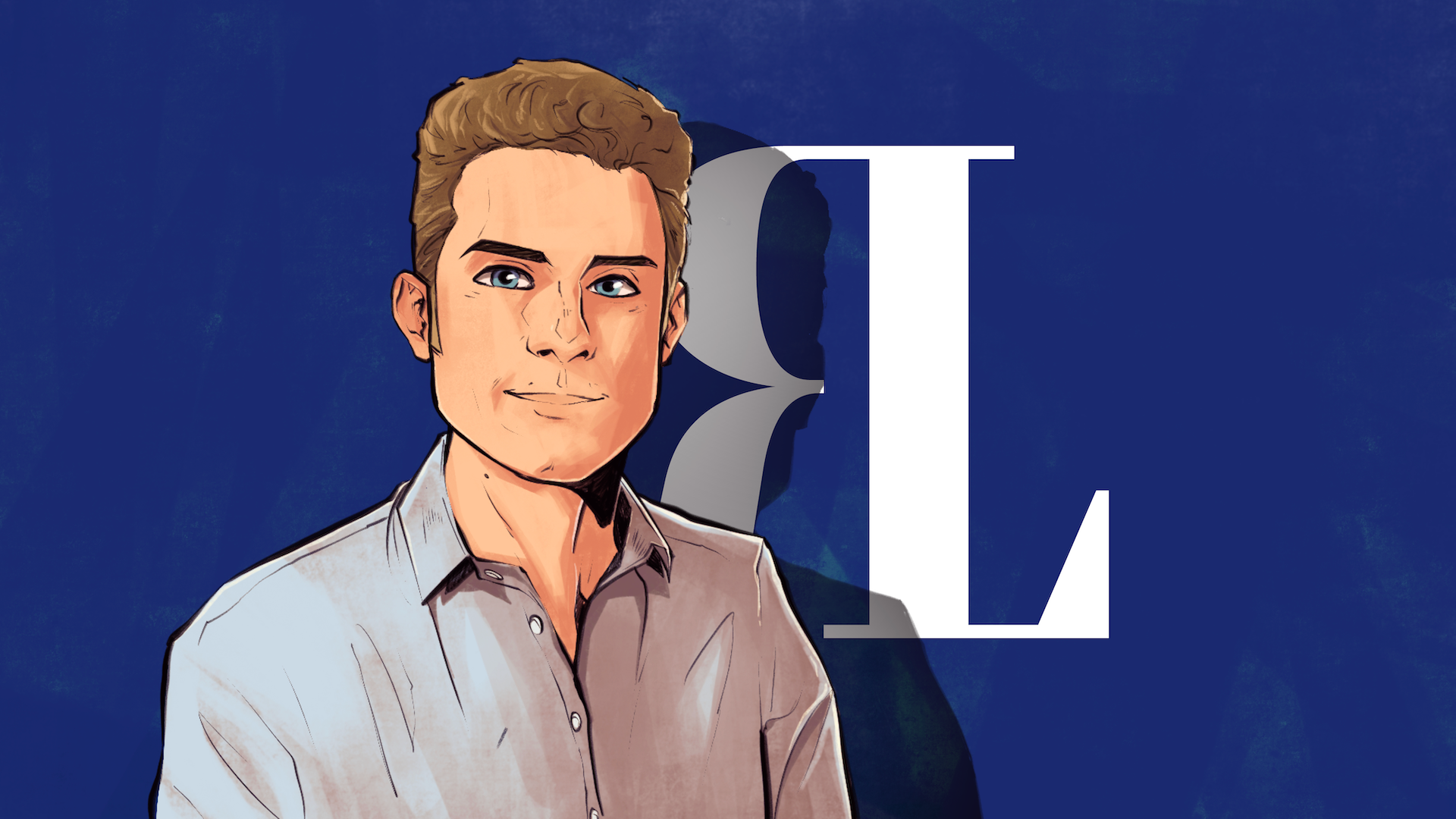
Drawing by Nathanaël Schmid for Le Regard Libre
By demanding ever greater transparency, our societies paradoxically encourage conformism, surveillance and hypocrisy. Here is a defense of the right to silence, nuance, discretion and ambiguity, indispensable in a liberal democracy.
Opacity gets a bad press. Everything must be shown, explained, documented, made visible. Companies publish their «values». Executives flaunt their famous «authenticity». Elected representatives declare their interests. As for lovebirds, they share their agendas - and soon all their thoughts!
Never have Western societies talked so much about transparency. They have also probably never so much encouraged hypocrisy. Hypocrisy is the daughter of hypocrisy, or vice versa, like prudery and pornography.
This is because a human community obsessed with visibility always ends up producing facade behavior. When it becomes risky to remain silent, dangerous to hesitate or costly to displease, individuals learn to play a role. After all, we're all social animals. We all adapt our speech to the times, show outward signs of virtue. Not out of deep conviction, but out of social prudence.
It's not very gratifying for the human species, but it's a documented fact. The mistake would be not to be aware of it, and therefore not to be wary of these trends in order to hope - a little - to control them. Samuel Fitoussi explains this brilliantly in his latest essay, already mentioned here.
Social networks have transformed this phenomenon into a collective reflex. Every event now calls for a public reaction. Every crisis demands an immediate moral stance. Businesses, artists, universities, the media: everyone is summoned to «take responsibility». Silence itself becomes suspect.
Hence the paradox: the more we demand transparency, the more we encourage strategies of concealment. Not outright lying, but something more subtle: performative conformity. Saying or doing what is expected to validate membership of the group.
In reality, a healthy society presupposes grey areas: discretion, restraint, ambiguity... However, we have gradually assimilated the idea - a false one - that those who don't show everything are necessarily hiding something. And that hiding something is necessarily wrong.
The negative outcome of these theses can be observed in the most ordinary human relationships. WhatsApp conversations between friends are delivered to the media. Seduction must be unequivocal. Parties must disclose who is funding them. We no longer live in a society of trust, but of surveillance.
Of course, the problem is not transparency itself. In many areas - corruption, conflicts of interest, action in Parliament[1] - it remains indispensable. Some scandals revealed by whistle-blowers or certain journalistic investigations have served the general interest.
But a liberal democracy cannot survive if all existence becomes a permanent exercise in exposure. A free society also implies the right to silence, nuance, evolution, paradox and even contradiction. It presupposes that we don't have to turn everything that crosses our minds into a public declaration - and everything that spills from our lips at a private party into a confession.
By trying to make everything visible, we risk making everything fake.
Graduate in philosophy and journalist by profession, Jonas Follonier is the founder and editor-in-chief of the Regard Libre.
[1]Parliamentary sessions have not always been open to the public, especially in Swiss democracies.

You'll also like




 French
  German
  English
Leave a comment