





Ralph Müller's cartridge: The politicization of the University of Geneva

Design: Nathanaël Schmid for Le Regard Libre
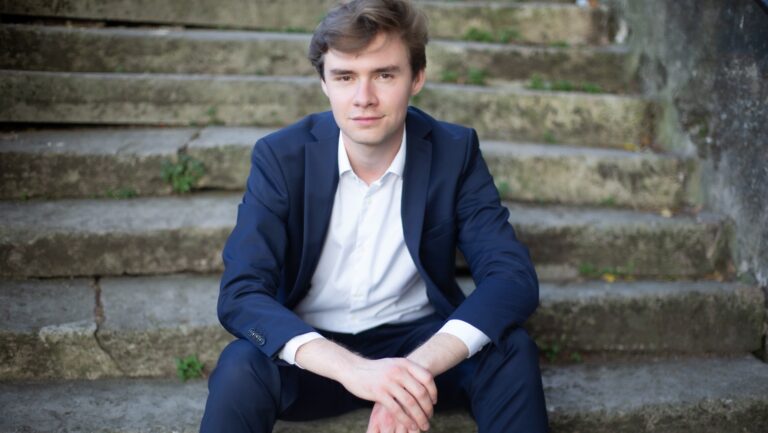
Each month, we feature a column by one of the personalities who give us the pleasure of alternating between the two. Youtuber Ralph Müller, a doctoral student in literature at the University of Geneva, delivers his scathing analysis of a typical contemporary phenomenon.
On September 22, students at the University of Geneva received an e-mail from the hilarious «Conférence Universitaire des Associations d'Etudiant.e.x.s» (CUAE), promoting its French workshops for non-French speakers. Among other things, it stated that «[p]articipants are divided into three groups: beginners, intermediate and advanced.»
This text, whose form unambiguously betrays the sender's bias, is yet another indication of the abnormal over-politicization of an association financed by university taxes and which claims to represent the interests of students. Based on my own experience and the feedback I've received during my years at the institution, notably as a doctoral assistant, there can be no doubt that this association, like all others like it, represents only its own interests and those of a handful of followers. While we have to give it credit for the legitimate actions it sometimes takes pride in, the radical nature of its positions, its participation in actions that are frontally opposed to freedom of expression and respect for others, and the defiant attitude it seems to constantly display towards the institution are absolutely contrary to its mandate.
As for the latter, it becomes complicit in these incongruities through naiveté or lack of vigor - not to mention that it itself participates in the undue politicization of its operations. A case in point is this editorial charter, in which the entire academic community is «asked» to adopt inclusive writing in its communication.
I've received dozens of testimonials from students reporting similar situations at their respective universities.
The impression we get is that it's always a minority whose daring is supported by the softness of others. It always seems as if the majority disapproves, and yet everything happens as if this majority were not a majority at all.
Read also | Ralph Müller: ChatGPT and human dignity
This paradox can be explained by two factors. On the one hand, the laziness and/or cowardice of the dissatisfied. Secondly, the fact that the people who make up this majority are usually apolitical in their relationship with their studies, and therefore only «form» a majority in terms of numbers, not in terms of their decision to form a group. On the contrary, political movements within universities always emanate from associations or even coalitions, compensating for the unpopularity of their ideas by the structure of their approach. They operate on the basis of bluster and the illusion of a strength that is only that of appearances. From this factitious pedestal, they vociferously echo clumsy complaints, provocative whims and other hair-raising whims, convinced of their rightful place by unfailing impunity.
Radical associations are probably the atmospheric underpinnings of an insidious politicization of universities, in terms of both ethics and scientific orientation. From communications to prizes to study days, it's all too clear that certain sensibilities and subjects are in vogue. While intellectual fashions are nothing new, we mustn't underestimate the pressure exerted on many students and researchers by a climate that combines the glamour of trends with the whisper of morality. It's about time certain iniquitous vigilantes were called to order.
You have just read a column from our print edition (Le Regard Libre N° 101).

You'll also like




 French
  German
  English
Leave a comment