



Faced with the lure of drugs, the taste of taste
Drawing by Nathanaël Schmid for Le Regard Libre
The most damaging effect of drugs is to make us believe that everything else is irrelevant, when in fact it's quite the opposite. To fight the temptation of substances, we need to campaign for wonder. For the taste of taste.
Since human beings are rational, why is it «in their blood» to think about... killing themselves? Or to take hard drugs, which are a slow death? Firstly, because man is free, and therefore free to do good or evil. Impulse can override reason, or an evil can be mistaken for a good, or a lesser evil for existence. Awareness of what we are implies awareness of what we are not: what we would have liked to be, what we could have been, what we will never be, what we will always be.
Drugs seduce men. With it, he can party or forget himself, which often turns out to be the same thing. We can imagine distinguishing between the good reasons for forgetting and the bad, separating the bad ways of forgetting from the worst. But is it always so easy to distinguish in the dark? For that matter, is there a difference in degree or kind between drinking wine and smoking crack? Is it okay to use heroin in moderation? Do we have the right to harm ourselves? When does danger to oneself become danger to others?
Vast philosophical questions, which may never be answered, and which touch on the equally eternal nature of us social animals. It's impossible to cover all the facets of this social theme. In our dossier of the month, However, we have made sure that we are talking as much about leaders than drug policy. dealers, We're more concerned with the power of drugs than the drugs of power. Borrowing the language of reflection, but also of song, story and photography.
As usual, nuance is the best way to think about your subject. If adopting a moralistic tone towards drugs is counter-productive, this does not mean that there is no moral value in individual acts. If the policy of repression is a failure, that doesn't mean that liberalization doesn't pose other problems and work better. Finally, if we have an opinion today on our own relationship with legal or illegal substances, it says nothing about what we will think tomorrow. We must always be wary of the future, and wary of ourselves. And that means thinking actively.
This leads me to believe that if there's an addiction, it's addiction to taste. In both senses of the word, in fact: being addicted to the desire for things and to their taste. We can't stress enough that the most harmful effect of drugs is to make us believe that everything else is of no real interest, when in fact it's quite the opposite. You have to give yourself the means to feel it. Personally, if I've been able to develop such a taste for friendship, beauty, philosophy, politics, journalism, as well as Lake Neuchâtel, bacon from my homeland, not to mention sour beer (oops), it's first and foremost because I've cultivated my TASTE OF TASTE, to use the splendid expression of writer Yann Moix in the first issue of his magazine Year Zero about the author of If the grain doesn't dieGide instills in his readers a taste for taste«.
Read also | Liberalism and drug legalization
Having a taste for taste (try it, it's delicious) multiplies pleasures, multiplies life. It's a spiritual paradise, but there's nothing artificial about it, because it's totally in tune with our human nature.
Write to the author: [email protected]
You've just read a free editorial. Debates, analyses, cultural news: subscribe to support us and get access to all our content!
-
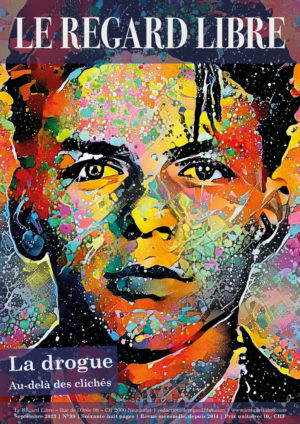 Le Regard Libre N°99 | Dossier DROGUEPrice range: CHF5.00 through CHF10.00

You'll also like






 French
  German
  English
Leave a comment