



«Frère d'âme»: an African-style Goncourt for high-school students

An overview of some of the major literary prizes - episode #
Le Regard Libre N° 48 - Loris S. Musumeci
«He said to me: ‘By the grace of God and by that of our great marabout, if you are my brother, Alfa, if you are really who I think you are, slit my throat like a sacrificial sheep, don't let the snout of death devour my body! Don't abandon me to all this filth. Alfa Ndiaye... Alfa... I beg you... slit my throat!’»
A chilling novel about a war of youthful sacrifice at the height of madness. Alfa Ndiaye and Mademba Diop are two «soul brothers»: close friends who grew up together, under the same roof. The first is strong, tall, handsome and valiant; the second, equally valiant, is not as powerful as his comrade, and is even rather frail. And that's no excuse when you're a Senegalese rifleman sent to the front. Despite Alfa's best efforts to protect Mademba, he soon succumbs. But what haunts the survivor's mind is the agony of the dead man. He begged him for three agonizing days to finish him off, but nothing could be done. Alfa could not kill him. He was inhuman. To fill the pain, he empties his enemies of their guts and collects their hands.
The story is gripping. Of course, people often talk about the Great War, but this is different. It’s viewed through two more original lenses: the Senegalese riflemen and the guilt of do not to have killed. Few books to date have addressed the fate of these young Africans who enlisted in the French army, even though they were regarded there as aggressive savages who could be sent anywhere.
The other angle—that of guilt—is also interesting because it raises important ethical questions. Throughout the book, David Diop successfully portrays the profound anguish Alfa is experiencing. He also clearly shows how the atmosphere of war has everything it takes to drive a person mad: constant fear, death lurking around every corner, the disappearance of comrades, the loss of a soulmate, the judgment of others, the enemy’s gaze when you’re about to kill him, and so on.
«By God’s truth, one must be mad to burst forth from the belly of the earth, screaming like a savage. The enemy’s bullets from across the field—those heavy pellets falling from the metal sky—are not afraid of screams; they are not afraid to pierce through heads and flesh, shatter bones, and cut short lives. Temporary madness allows one to forget the truth of the bullets. Temporary madness is the sister of courage in war.»
The narrative is powerfully structured, and readers are fully immersed in this war and the mental torment Alfa endures, but what stands out most is the distinctly African style the author employs. Yes, there is such a thing as a Francophone African style. That doesn’t mean that all Francophone writers from sub-Saharan Africa write in the same style—far from it—but they can evoke an African atmosphere by giving words a very distinctive flavor. Please don’t accuse me of racism, because the same theory applies to literature from French-speaking Switzerland: Charles-Ferdinand Ramuz is its most illustrious representative.
Returning to the African style, its strength lies in the fact that it allows the text to pulse to the rhythm of the blood flowing through the veins of a Senegalese infantryman. And of course, the style helps transport us back to the story of Alfa and Mademba’s childhood in their village. The imagery is vividly present—we can almost smell the damp earth and see the gleaming white shirts against their beautiful dark skin. There’s also a certain spirituality, drawn from ancestral rites, that rings true thanks to the African style.
Soul Brother, finally, is a quick read—perhaps too quick. This may have appealed to high school students, and rightly so. However, it wouldn’t have hurt to develop the plot a little further. Especially since the author seems a bit lost toward the end. Two conclusions can be drawn: either he was right to stop because he ran out of inspiration, or he should have explored other aspects of the story to make it a more complete and longer novel. Unless the text was cut short by a hand, or deprived of a Soul Brother.
«The fourth owner of that collectible hadn’t done anything wrong, I think. I could see it in his blue eyes when I gutted him in no man’s land, as the captain put it. I saw in his eyes that he was a good boy, a good son—still too young to have understood women, but certainly a future good husband. And yet here I was, falling upon him like misfortune upon innocence.»
Write to the author: loris.musumeci@leregardlibre.com
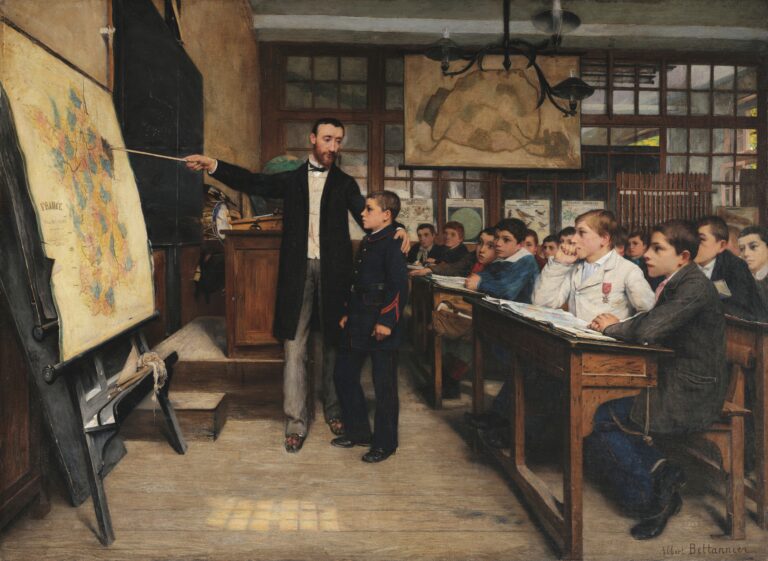
Photo credit: © Wikimedia CC
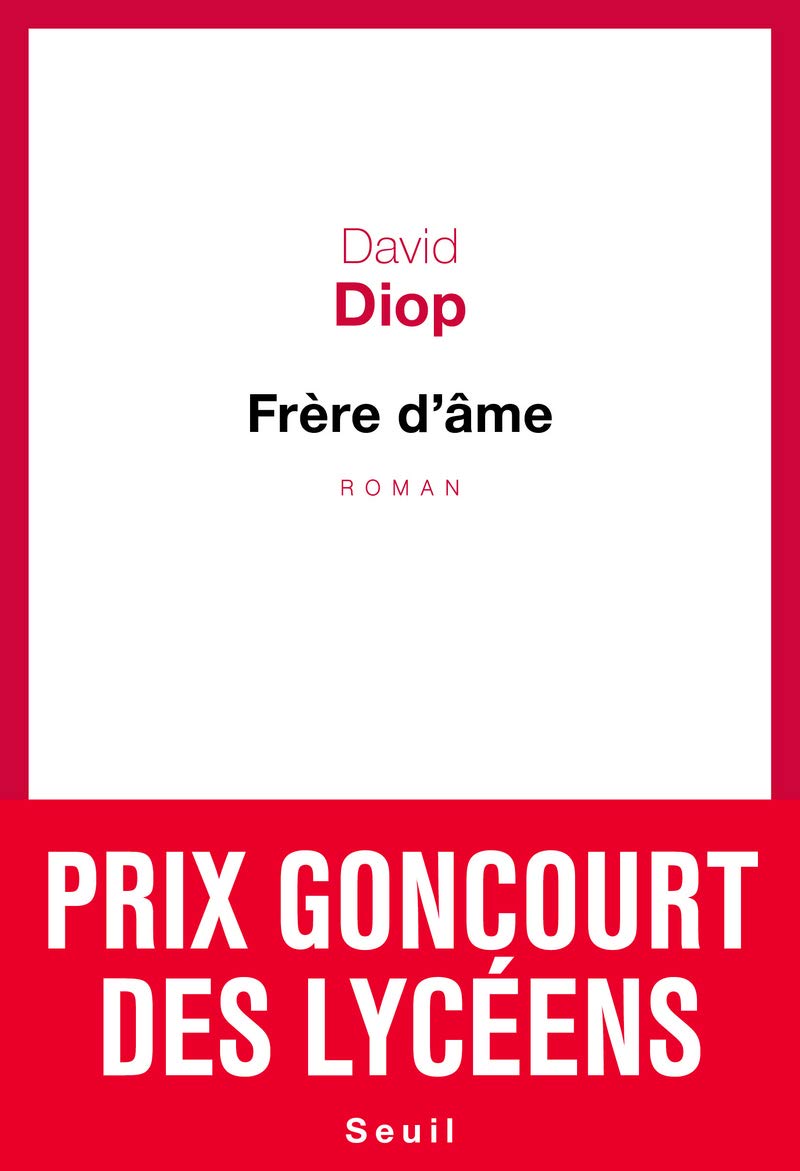
David Diop
Soul Brother
Editions du Seuil
2018
175 pages
You'll also like


 French
  German
  English
Leave a comment