



«Le Sillon»: an instructive Renaudot award

An overview of some of the major literary prizes - episode #1
Le Regard Libre N° 47 - Loris S. Musumeci
«Le Sillon is dedicated to those whose absence and memory resonate between these lines.»
Part fiction, part eyewitness account, Valérie Manteau tells the story of a young French journalist's wanderings through Istanbul. She follows in the footsteps of Armenian editorialist Hrant Dink, murdered on January 19, 2007 by a Turkish nationalist outside his opposition newspaper. Agos in Istanbul. The novel resurrects the memory of this martyr to freedom in a Turkey eaten up by Islamism and totalitarianism.
Just like last year, the Renaudot Prize jury honored an informative work. In 2017, Olivier Guez saw his book The Disappearance of Josef Mengele awarded for bringing to the public’s attention the fictionalized story of a Nazi doctor in exile in South America. In 2018, history was once again honored when the prize was awarded to Valérie Manteau.
On the one hand, the book is remarkable. Not only does it provide insight into the figure of Hrant Dink, but it also offers subtle and poignant reflections on Turkey today. «What kind of country is it where a man can be murdered in broad daylight on the street and be congratulated by those who were supposed to protect him?» One can also sense the writing style of Valérie Manteau, a journalist and former Charlie Hebdo – which takes place in a political arena she knows well and to which she is uncompromisingly committed.
«Dink was born out of the slogan ‘We Are All Armenians,’ which marked a turning point in Turkey’s history—a solidarity movement that had taken hold as early as 2007, during the election campaign of Professor Baskin Oran, a former editorial writer for Agos. His platform was that ‘Turks should defend the Roma, the Roma should defend the Adyghe, the Adyghe should defend the unemployed, the unemployed should defend women, women should defend the Alevis, and the Alevis should defend gay people’; this is what Erdogan is at war with today.»
While the exploration of the peaceful coexistence of different peoples within a single nation is viewed through the lens of Turkey, it is intended to be universal. Here, the reader follows the young journalist’s geographical wanderings through Istanbul, just as they follow Valérie Manteau’s mental wanderings based on Hrant Dink’s life story. In this sense, Le Sillon adds another dimension to the narrative—that of a historical, philosophical, and political essay.
«Agos means ‘Le Sillon.’ It was a word shared by Turks and Armenians—at least by the peasants—back when they lived side by side. »Le sillon,’ as in *La Marseillaise*? ‘May impure blood water our furrows’—what irony, for someone murdered by a nationalist. Jean nods; if you’re looking for prophecies with Hrant, you’re in for a treat. At a conference where he had been invited to speak about minorities in Turkey, one of the speakers—a Kurd—thought it worth pointing out that Turks and Kurds had fought side by side, and Hrant responded: ‘What kind of peace are we talking about if we base our brotherhood on the blood we’ve shed together? Don’t you think I’ll ask you whose blood it is that you’ve shed?’”
On the other hand, it must be acknowledged that the book has its share of tedious moments. Valérie Manteau is a journalist, and it shows a little too much. Despite the appeal of getting to know Hrant Dink and discovering Istanbul through the protagonist’s eyes, the text becomes tedious rather quickly. It feels more like a long newspaper article than a narrative. There are also the main character’s romantic entanglements, which struggle to captivate the reader due to their predictability.
Furthermore, while the author certainly writes about Turkey, one sometimes gets the impression that she takes pleasure in listing a whole host of Turkish names that are difficult to decipher. Finally, the writing style takes certain liberties that, depending on the passage, border on clumsiness, leaving the reader lost in a whirlwind of confusion. But, I repeat, these flaws in no way detract from the richness of having gotten to know, for the duration of a book, the fascinating figure of Hrant Dink, who certainly leaves a lasting impression.
Write to the author: [email protected]
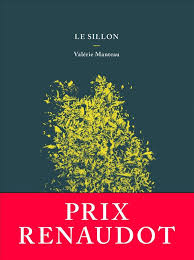
Valérie Manteau
Le Sillon
Le Tripode Publishing
2018
262 pages
You'll also like




 French
  German
  English
Leave a comment