




For a strong federal Europe

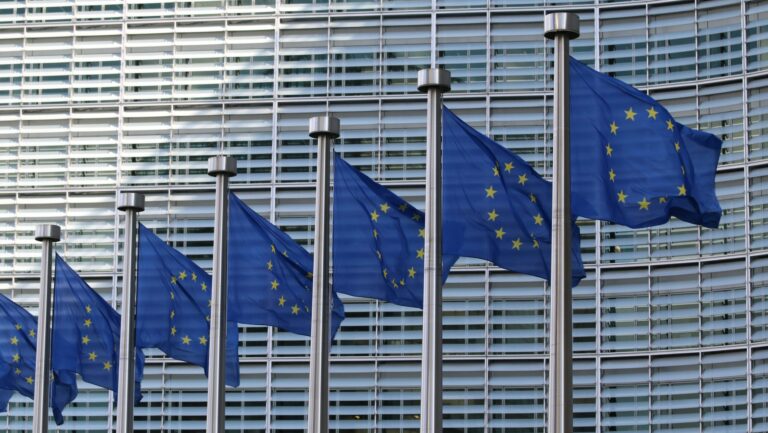
Photo: Christian Lue (via Unsplash)
Over the next few decades, Europe will undeniably face numerous challenges at technological, political, institutional, military, identity, cultural, religious, social and environmental levels. But what role should it play?
It is crucial to this plea to establish the following premises: we are talking here about Europe in the broadest sense, from the Atlantic to the Urals, from Iceland to Anatolia, from the Straits of Gibraltar to Murmansk, via the Alps and the Balkans; all this without taking into account its current political leaders, whether hostile or not to the idea of a strong Europe. The key to the success of this Europe, if it is to survive, must be based on three principles: peace, federal institutions and increased cooperation.
Founding peace
Today's European Union (EU), as we know, was created on an economic basis to maintain lasting peace between two old enemies, now probably the world's closest allies. Tomorrow's Europe must continue along this path and pursue this ideal of peace.
Wars always benefit a small circle of people, and very rarely the civilian populations affected during and after the conflict. In the case of Europe, this seems to be the exception that proves the rule: like a phoenix rising from its ashes, it has managed to get back on its feet and move forward as one.
A solid federal model from top to bottom
If tomorrow's Europe is to establish itself and its legitimacy at the table of the world's great political powers, it must urgently adopt a federal political and institutional system, duly anchored in a new European Constitution. The continent's diversity in the areas mentioned above simply needs to embrace a clear division of powers between the future federated states and the federal government.
For the sake of coherence, foreign policy, the armed forces, external border control and immigration management should be the exclusive responsibility of the federal government. On the other hand, education, culture, civil and criminal law should remain the responsibility of the federated states.
These are just a few examples, but a conditio sine qua non must prevail before any distribution can take place: it is the future federated states that will delegate the aforementioned powers to the federal government, from the bottom up, and not the other way round, as is the case in Canada.
As far as the right to mint the (single) currency is concerned, these future institutions need to wipe the slate clean of the current eurozone concept, and lay new foundations to avoid the mistakes already made. The same would apply to financial policy.
A multi-speed Europe?
The question of a multi-speed institutional Europe, or rather Europes, has recently come up in the mainstream press as a potential way out of the impasse in which the European Union has found itself. It would be better to start from the premise that these many Europes already exist and are operating with varying degrees of efficiency.
They are known as the EU, EFTA, NATO, OSCE, OECD, Schengen/Dublin, Zone Europe and the Council of Europe. Some are confined to the continent, others are much more extensive. We need to continue with this model of a plurality of unions, and leave the freedom to those states that want to move forward together in greater depth on certain subjects to do so, rather than hindering them, or even leaving.
This should in no way prevent cooperation in a number of areas, on the sole condition that it serves Europeans.
Switzerland on the lookout
What should Switzerland do, you may ask? Given the current situation, there's only one thing it can do: wait. Wait and discuss it internally. Wait for the right opportunity. Wait until the future federal Europe is ripe and ready to welcome it. Waiting for the people to get used to the idea that a federal Europe is not a monster, but an opportunity. Waiting for the popular decision-making process to be respected, to the letter and according to the rules, or else the door will be slammed shut on any prospect of European integration.
A rocky road to Olympus
Europeans are capable of moving forward if they want to, and if they seize this opportunity to assert themselves in good time.
There's a long way to go before we can achieve this model, and no one is saying it will be easy - in fact, the opposite is true. There will always be political leaders who put the brakes on to remain stuck in an outdated historical perspective.
On the contrary: a thousand years of almost uninterrupted war, bloodshed and destruction were followed by the creation of the ECSC, a stable peace established with growing, albeit imperfect, legality and cooperation.
All that's needed now is a handful of visionaries in the countries to inject this momentum. Or are they already present and in place?
This article appeared in our print edition (Le Regard Libre N° 30).
You'll also like




 French
  German
  English
1 comment
beautiful blog. a pleasure to stroll through your pages. a wonderful discovery and an enchantment.don't hesitate to visit my blog (link on pseudo).
with pleasure
Leave a comment