





Pascal Couchepin: «Personally, I was in favour of a two-man ticket».»
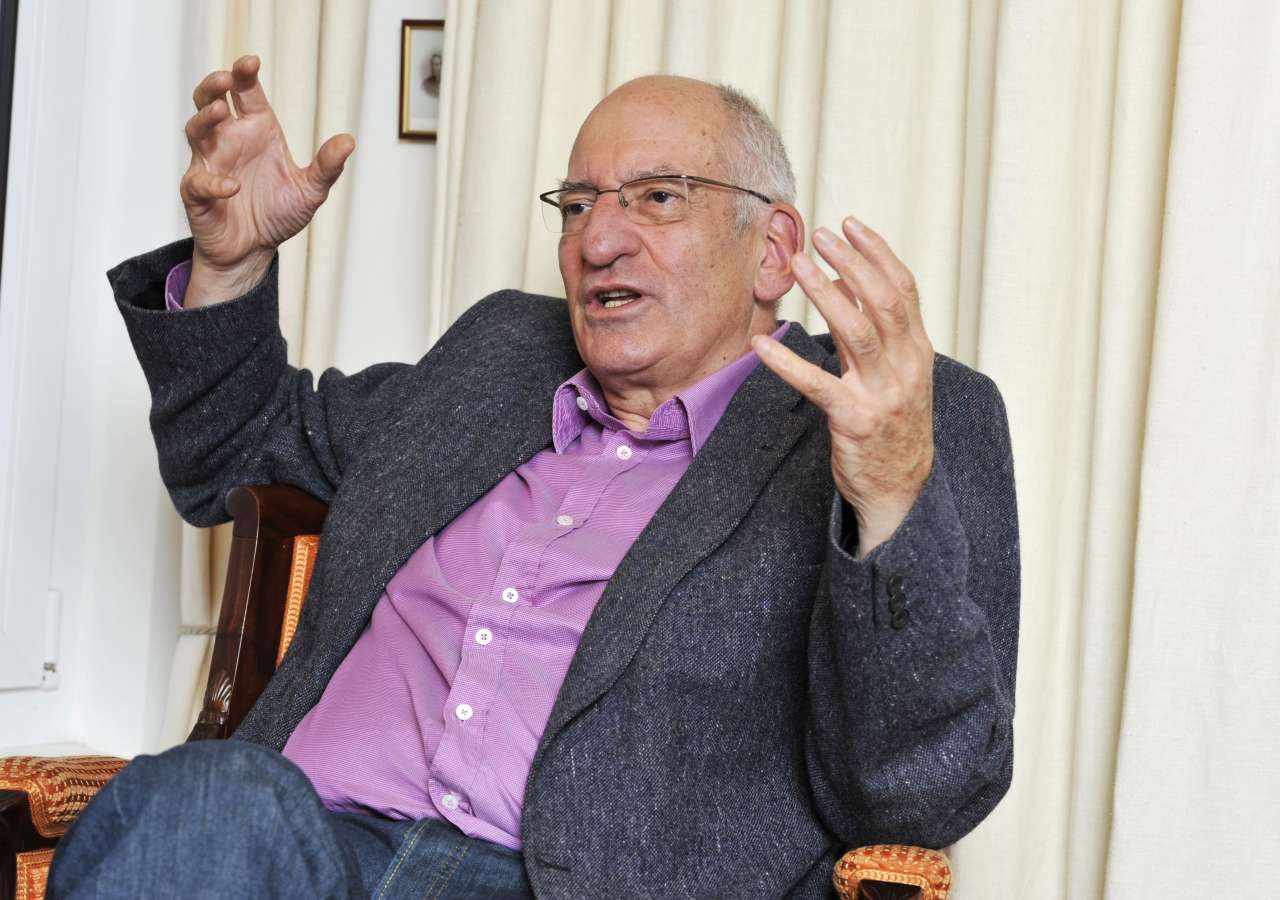
Unpublished Article – Jonas Follonier and Nicolas Jutzet
Last Friday, the 1ster In September, the PLR parliamentary group held a meeting in Neuchâtel to decide on the type of candidacy it wishes to put forward to succeed Didier Burkhalter on the Federal Council. A three-candidate slate was selected: Ignazio Cassis (the favorite), Isabelle Moret, and Pierre Maudet remain in the running. Reactions from Pascal Couchepin, a former Liberal-Radical President of the Confederation.
Le Regard Libre: Did the selection of a three-person ticket come as a surprise to you?
Pascal Couchepin: I wasn’t surprised, because in this area, tactical considerations often take precedence over substantive ones. Personally, I was in favor of a two-person ticket, not a three-person one. Imagine a four-, five-, or six-person ticket—that would be leaving the decision up to the other parties. No, it’s essential that the party first agree on one or two names in order to make an initial selection based on qualifications, rather than leaving the entire choice up to other political parties.
Are we dealing with three high-caliber candidates, as most of the party's leading figures claim?
I would say that each of the three candidates represents a very important aspect: representation of Italian-speaking Switzerland for Ignazio Cassis, representation of women for Isabelle Moret (with Doris Leuthard’s departure, the number of female Federal Councilors will be insufficient), and youth as well as executive experience for Pierre Maudet.
It’s a fair assessment to say that you helped Pierre Maudet rise to prominence. What set him apart?
I’ve known Pierre Maudet for about twenty years; I met him in Geneva when he was still a student. I’ve since witnessed his exceptional political career. He achieved his goals against all odds and served as an outstanding chair of the Federal Commission for Children and Youth (CFEJ). One need only look at his career path to realize that he is an exceptional politician—all the more so given his youth. I wish him a bright future; but it is not for me to say when or how.
As a Radical from Valais, do you think the difference between liberals and Radicals no longer exists, or is it still noticeable, particularly among the three candidates?
This difference is historical. You can call someone a liberal one day and a radical the next. Today, only liberal-radicals exist. Take the example of Geneva, where the merger between liberals and radicals is recent: after the merger, it became apparent that party members were voting one way one time and the other way the next. The labels «liberal» and «radical» are no longer relevant, and this also applies to the election we’re discussing.
Let’s now turn to the issue of dual citizenship, which has sparked a reaction, especially on the left. You were named an Officer of the National Order of the Legion of Honor. Do you think it’s problematic to be a Federal Councilor and a dual citizen?
To be honest, I find this controversy a bit pointless. In the 19thth In the 19th century, it was said that a Catholic could not be a good federal councilor because he had dual allegiances. Later, being both Jewish and Swiss became seen as a cause for suspicion when aspiring to serve in the national executive branch. Let’s be serious: there have been some very good Federal Councilors who had ties to other countries. Some have connections to China or the United States. Such ties are bound to exist and can be seen as a potential asset.
Ultimately, it will be Parliament that elects the new judge. In your opinion, what will really be the deciding factor?
The integration of Switzerland’s various regions will most certainly play a role in determining the number of votes each candidate receives. Today, this issue commands a majority in parliament, but perhaps the campaign that is just getting underway will change the landscape. All it would take is a shift of ten votes during the Night of the Long Knives, and the scenario could be turned on its head.
You became a Federal Councilor in 1998. Does your election seem like it was a long time ago or just yesterday? What memories do you have of it?
It seems like quite a long time ago to me. First of all, I notice that the press was much less involved back then than it is today. Being elected to the Federal Council is an extraordinary moment in a person’s life. I have fond memories of it. And I remember that the night before, I went to bed early, telling myself, «There’s no point in overthinking it; we’ll see what tomorrow brings.»
Write to the author: jonas.follonier@leregardlibre.com

You'll also like


 French
  German
  English
Leave a comment