




Who really understands neutrality?
News Mondays - Clément Guntern
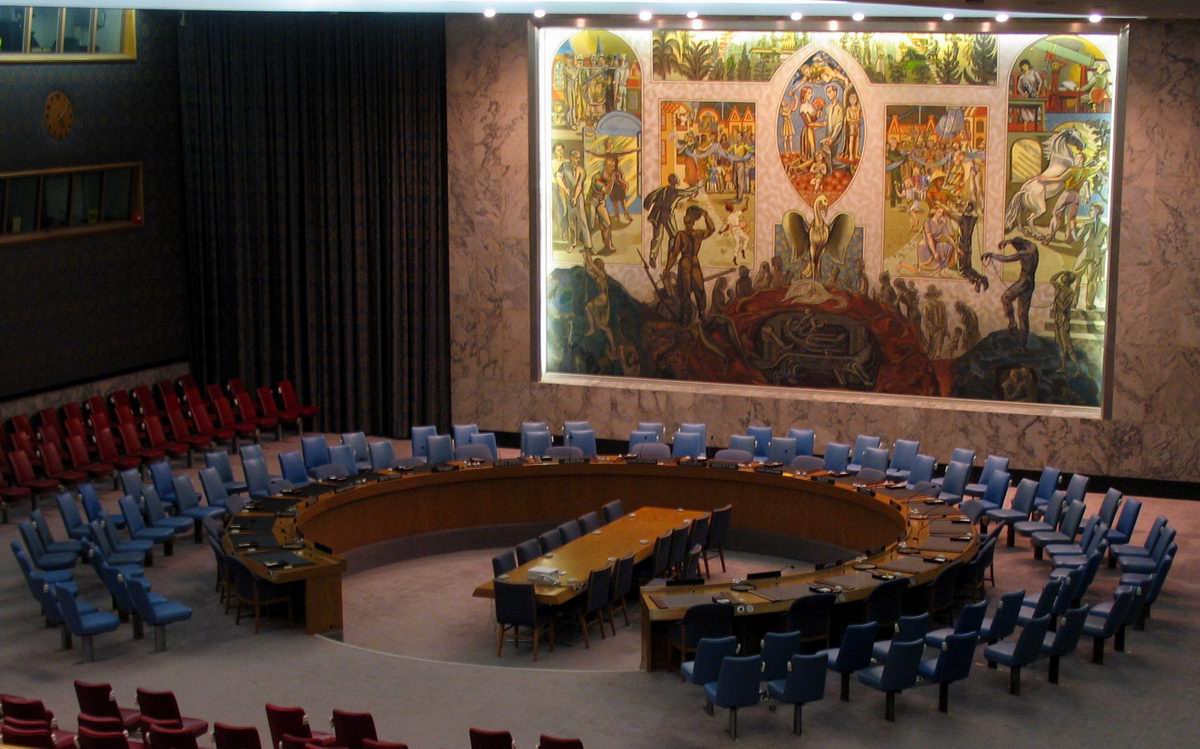
In 2006, Micheline Calmy-Rey, then Federal Councillor in charge of the Department of Foreign Affairs, launched the idea of a Swiss candidacy for the UN Security Council. Since then, the idea has gained ground and, in 2011, the process was launched when Switzerland's official candidacy was submitted. However, the image of a small, neutral Switzerland sitting in the Council chamber in New York is not popular with some, especially on the right.
Traditional skepticism in foreign policy remains the bedrock of the SVP. However, it sometimes extends to other parties such as the PLR and PDC. Within these parties, there are now doubts about the merits of such a candidacy for Swiss neutrality, but also about the usefulness of the Confederation's participation in the UN body. Some have even declared that, if Switzerland were to join the Security Council, neutrality could no longer be respected. The president of the PDC declared that to sit on the Security Council «would be to take Switzerland's neutrality to the devil's kitchen». Clearly, neutrality is as misunderstood as ever.
Is the devil hiding in New York? As a reminder, the mission of the Security Council under the United Nations Charter, which Switzerland has ratified, is to ensure peace between States, whether by imposing sanctions or deciding on military operations. In any case, the Council is a privileged forum for dialogue at the highest global level, not only on hot-button issues but also on topics that don't make the headlines of every newspaper.
The problem of neutrality doesn't even arise in this case, because when the Security Council imposes sanctions or takes a decision, it can only be done unanimously by the permanent members, since they all have the right of veto. Given that the UN can now be considered a universal organization, with almost every country on the planet represented, a decision to launch a military operation or impose sanctions should no longer be seen as a unilateral act by one state, but rather as a police operation between states. Neutrality is therefore not involved. Even if Switzerland felt uncomfortable about a decision, it would not be forced to vote for such resolutions.
Thus, to posit that neutrality is incompatible with the Security Council is also to say that the UN is irreconcilable with it. This is a line of reasoning that very few people in Switzerland hold at present, as it has been proven since the Confederation joined the organization in 2002. Indeed, the UN bodies have never really jeopardized the country's neutrality or integrity. On the contrary, Switzerland's participation in the Council could only be beneficial, both in terms of the visibility it affords and the usefulness for Berne's commitments to peace and development worldwide.
Although neutrality may be open to interpretation in peacetime, involvement outside the country is desirable from the point of view of its own interests, while maintaining the integrity, impartiality and values that guarantee its neutrality in world affairs.
Write to the author: [email protected]
You'll also like



 French
  German
  English
Leave a comment