




Peru 2017: Lake Titicaca and Cuzco
Le Regard Libre N° 22 - Marina De Toro
«My last trip, in the form of a story and photographs. Episode 2/2»
After three days« trekking in the Colca Canyon, we headed for Puno, a city situated at an altitude of 3800 metres on the shores of the famous Lake Titicaca. We made the journey by night bus, and when we arrived in Puno early in the morning, the cold and lack of air took us by surprise. We spent the whole day on this immense lake, straddling Peru (60%) and Bolivia (40%). Lake Titicaca is the highest navigable lake in the world, and is three times as long as Lake Geneva. On this immense expanse of water, we visited two islands: a small group of artificial islets called the »Uros" islands, and the natural island of Taquile. It takes around two hours by boat to get from one island to the next, which is a testament to the lake's surface area, given that we only crossed a small part of it.
The inhabitants of one of the Uros islands welcomed us with song and dance, dressed in the region's traditional garb. They live on artificial islets made from totora, a reed-like plant that grows in the lake and is used not only for the construction of all infrastructures, but also considered a fundamental economic element of the islands. Before the arrival of mass tourism, «Uros» was the name of the people who originally lived on these floating islands, but they disappeared in the middle of the 20th century.th century to make way for the Aymaras (people of Lake Titicaca).
Now, the inhabitants have chosen to live on these artificial islands to carry on the tradition, but it's largely tourism that sustains them, and today's young people don't want to build their future on a small island in the lake. The future of these islands is therefore in jeopardy, and soon their inhabitants will be solely at the service of the country's tourism industry. The atmosphere during the visit was therefore strange, in my opinion; we really felt that tourists were indispensable to the Aymaras of Uros. Even though this visit was an incredible and unprecedented experience for me, this highly planned and overdone aspect blurred the authenticity of the tradition.
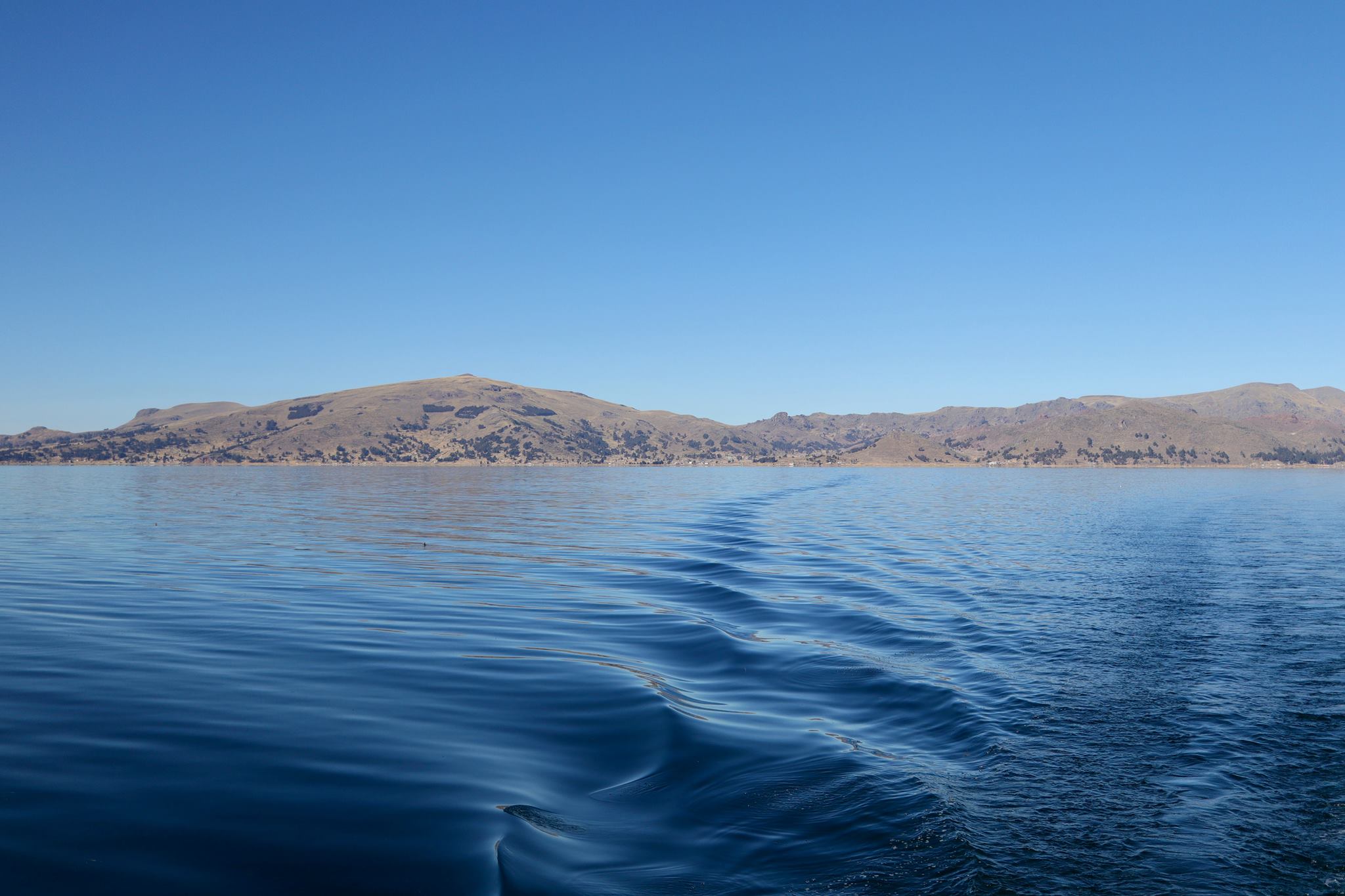
Lake Titicaca
We continued on our way to Taquile, a natural island just a kilometer and a half long. The atmosphere here is different from that on the Uros islands, as the inhabitants live not only from tourism, but also from agriculture. Taquile is also organized politically and geographically, with the main village located at the highest point of the island. This is not the case in Uros, where the inhabitants live in communities and the chief of an islet changes every year. So Lake Titicaca is not just a great expanse of water: it's full of cultural and traditional diversity, and part of the legends surrounding the creation of the world and civilizations.
In Inca culture, the creator god Viracocha is said to have emerged from Lake Titicaca to create the Sun, Moon, water and the first humans. Other legends recount that Manco Capac and Mama Ocllo, children of the Sun God (Inti), were born from the lake and sent to Earth to bring civilization to human beings. Together, they founded the capital Cuzco, which means «center of the world» in Quechua, and the Inca civilization that subsequently developed. The provenance of these myths is difficult to determine, given the scarcity of written sources from pre-Columbian civilizations. One of the only sources to have come down to us is the book by Inca Garcilaso de la Vega, a writer of the 16th century.th century, recounting the history of Peru and especially that of the Incas.
The next logical step was Cuzco, the last stop on our journey. The Cuzco region is rich in history, art and surprising landscapes. Indeed, the city lies at an altitude of 3,400 metres, while a hundred kilometers away, a multicoloured mountain called Vinicunca reaches 5,200 metres. It seemed to me that this mountain was still not very popular with tourists. But I was wrong. It took three to four hours by bus from Cuzco to reach the starting point of the trek. To my great surprise, several hundred tourists of all ages and nationalities were about to begin the 800-metre ascent.
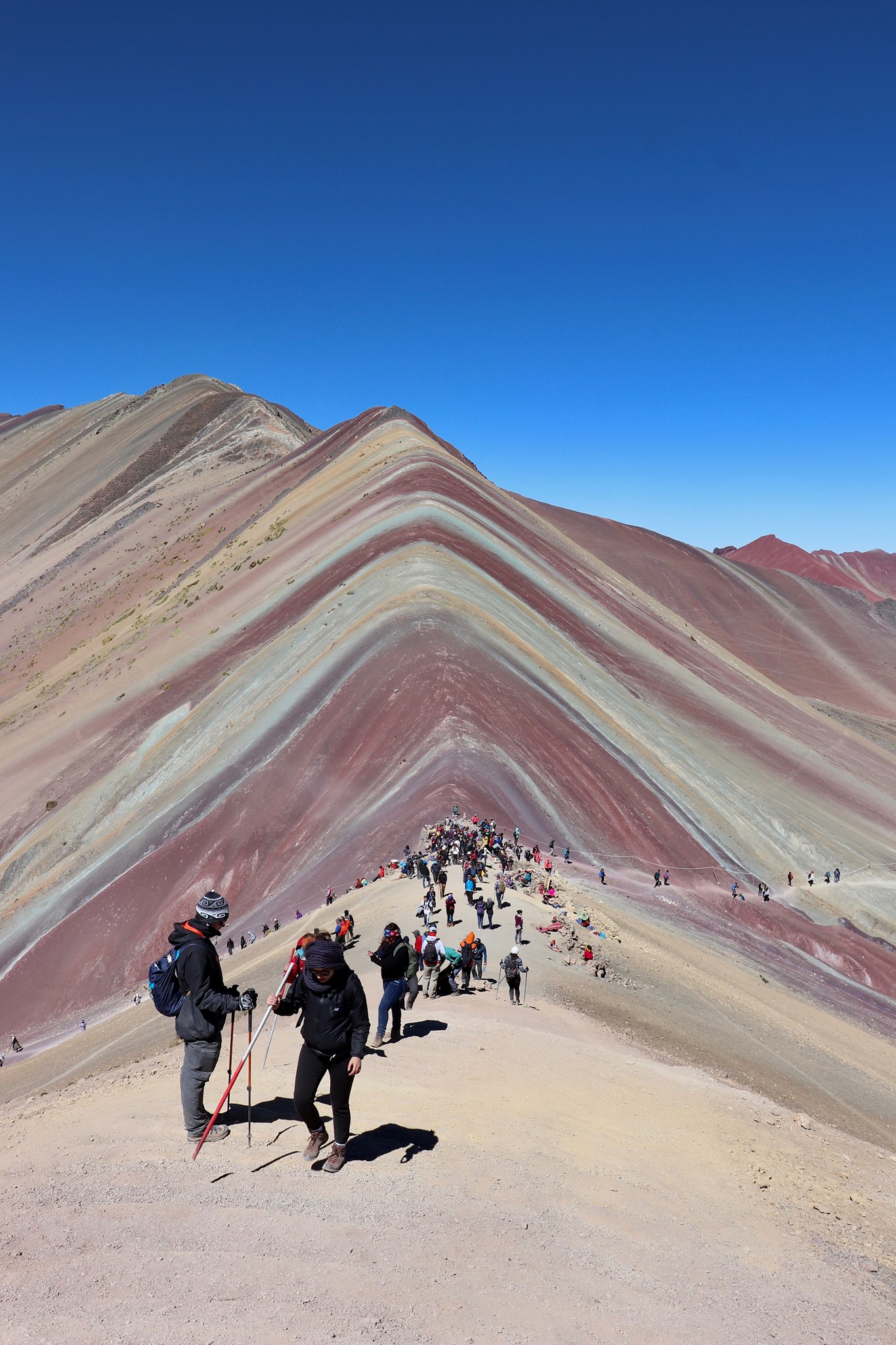
The Vinicunca summit
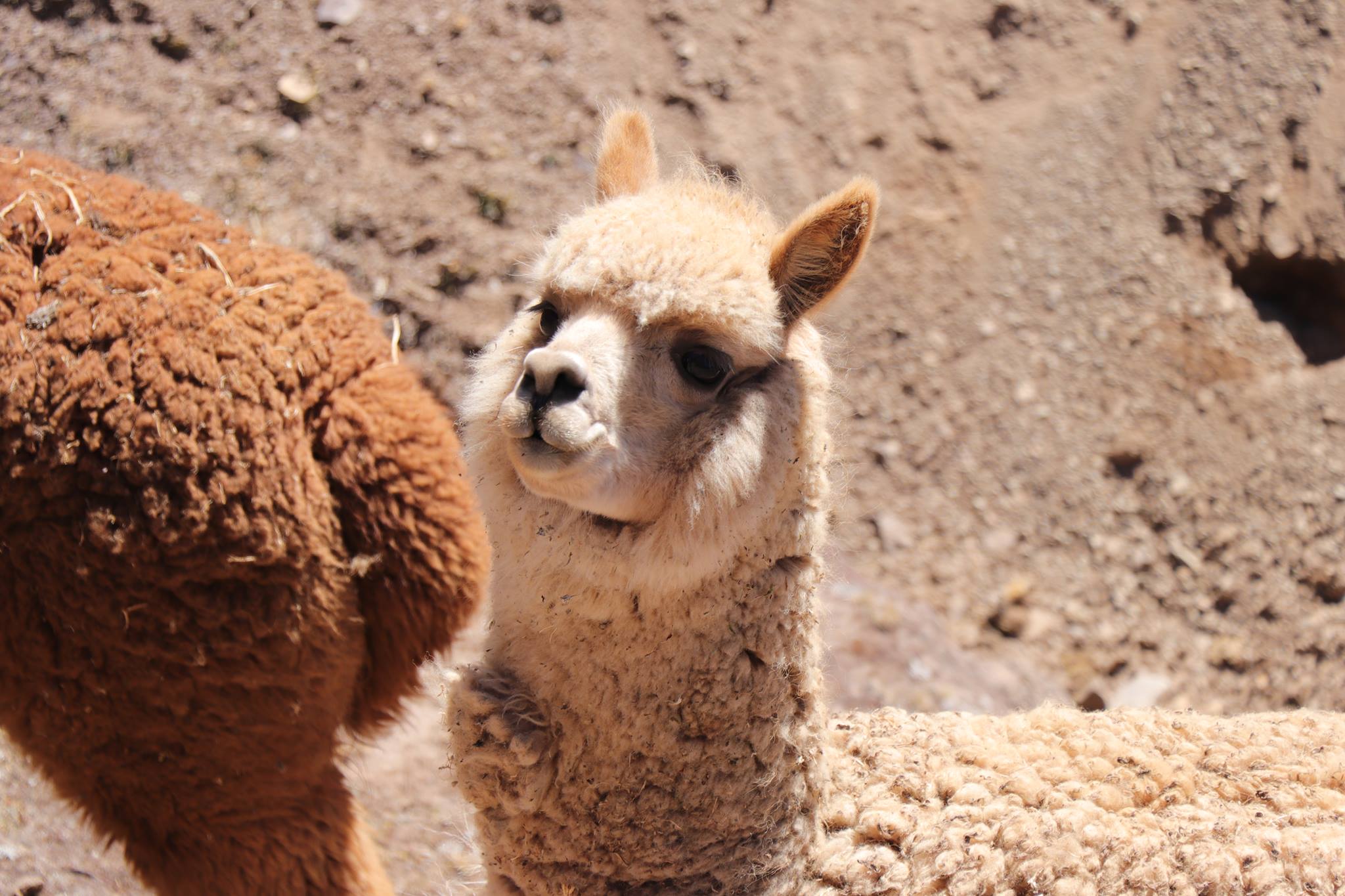
We began the climb and my breathing became increasingly labored. The panorama was breathtaking too, as the closer we got to the goal, the redder the mountain rock became. We saw many herds of alpacas, animals similar to llamas, but with thicker, softer coats used for weaving and making clothes. This wool is still affordable for most of the population, unlike vicuña wool, which is rarer and therefore more prized by the upper social classes. As we approached the last few hundred arduous meters, the temperature dropped steadily, while the sky cast no shadow over the sun.
At 5200 metres, the view was spectacular. Vinicunca has many colors, normally seven, including blue, red, green, yellow and other shades I can't describe. A glacier stood in front of the colorful mountains, looking almost unreal because it was so different from the rest of the environment. This is the most amazing thing about Peru: in the space of three weeks, we crossed desert landscapes on the Lima and Nazca sides, the start of the Andes Cordillera in Arequipa, then the Puno highlands and finally the mountains and semi-tropical corners in the Cuzco region. This last stage took place during a five-day trek to Machu Picchu, the ancient city of the Incas.
We began the trek in a fairly wooded, but very dry environment, and the air cooled as we approached the Salkantay mountain, one of the highest peaks in the Andes at 6,271 meters. There were around twenty of us in a group called «Chasquis», a reference to the Inca messengers who ran eight kilometers a day while taking turns on the trail. As we headed towards Mount Salkantay, the path became very rocky and the landscape sparse in vegetation. By contrast, once we'd crossed the pass and reached the 4600-meter mark, we descended again, surrounded by the selva alta, a semi-tropical transition zone with dense vegetation just before the Amazon rainforest.
Finally, after four days' walking, we reached Machu Picchu, one of the Seven Wonders of the World. This ancient site was discovered in 1911 by an American explorer and historian by the name of Hiram Bingham. Although he wasn't the only man to cross these ruins, Hiram Bingham was the first to undertake serious studies of the site. To this day, we still don't know the exact reason why this ancient city was built. We do know, however, that it was surely built during the reign of the ninth Inca emperor Pachacutec, around 1440 or 1450. The city remains a mystery, particularly in terms of its construction, as the site is at an altitude of over 2,400 metres, and the stones on it are very large.
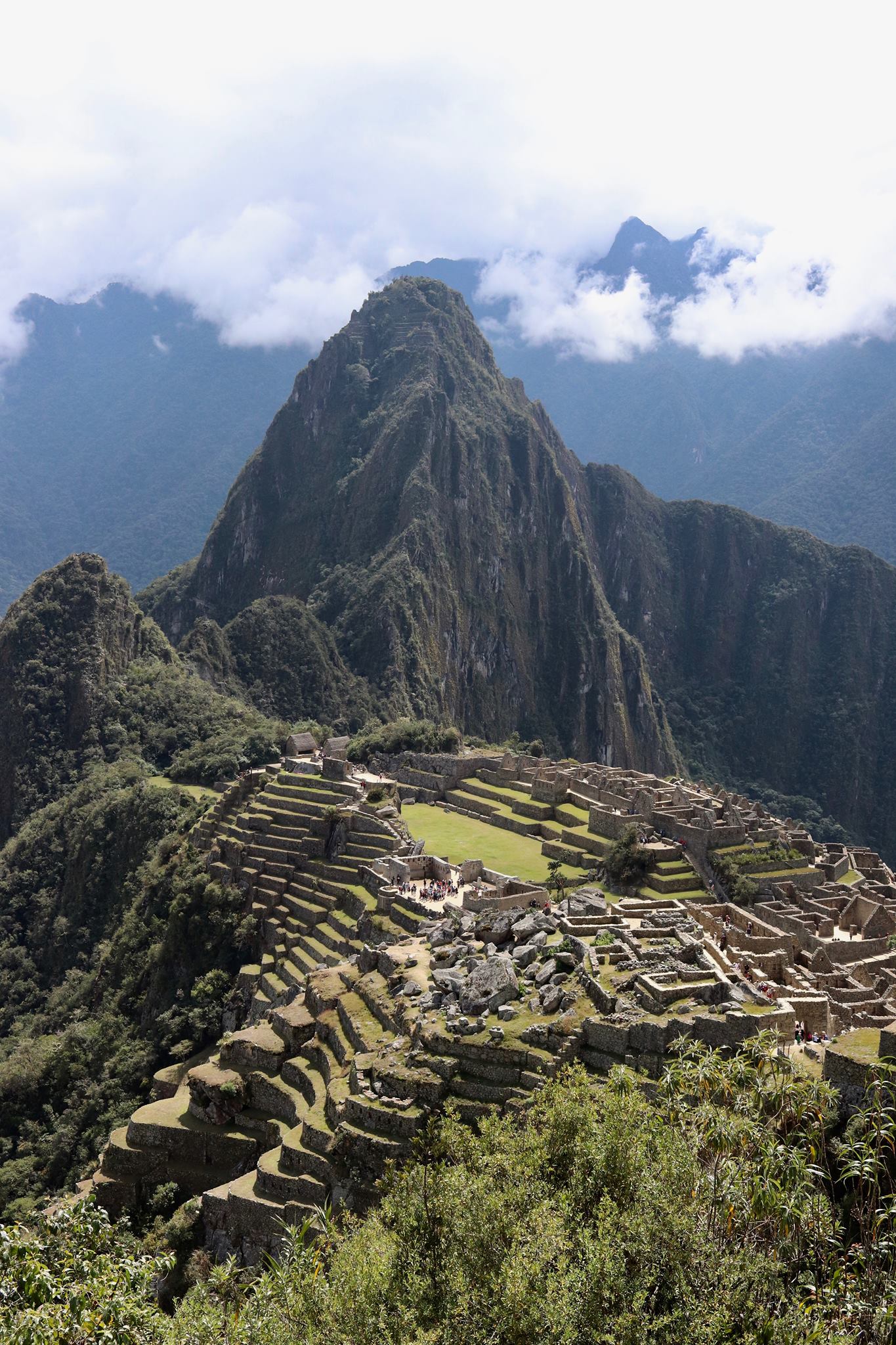
Macchu Picchu
What's more, the site is difficult to access, and it would take almost superhuman strength and willpower to reach Machu Picchu with huge chunks of stone. Yet the Incas did it. Some theorize that Machu Picchu was the Versailles of Cuzco, a home away from the political center where the imperial family could stay. This city far from the center was a real little town, with its temples, agricultural terraces, dwellings, frontier and even its cemetery. It is thanks to the objects, skeletons and inscriptions found on the site that archaeologists have been able to decipher the life led by the Incas and their subjects. In fact, according to the skeletons and clothing found, the city's inhabitants were mostly well-to-do, well-fed and free from the after-effects of battle.
Peru has never known famine, its rich environment allowing it to grow a wide variety of foods all year round. Terraced cultivation, like that found on Machu Picchu at the time, favored this fertility. It's amusing to note that «Machu Picchu» («old mountain» in Quechua) is not the real name of the site, but that of one of the mountains bordering it. In fact, there is no record of its original name.
This mysterious ancient city marked the end of our trip to the other side of the world. When the time came to take the plane back to Switzerland, I felt a little sad, because Peru had shown me a different history, quite different from that of the Old World. A history all its own, linking the original Andean culture with the one the conquistadors brought over 500 years ago. It's a strange balance, a kind of «yin and yang» that can be found at both cultural and natural levels. Opposites, like divergent environments and cultures, coexist and form an authentic whole that, in the end, made me feel a little at home.
Write to the author: [email protected]
Photo credits: © Marina De Toro, for Le Regard Libre
You'll also like
 French
  German
  English
Leave a comment